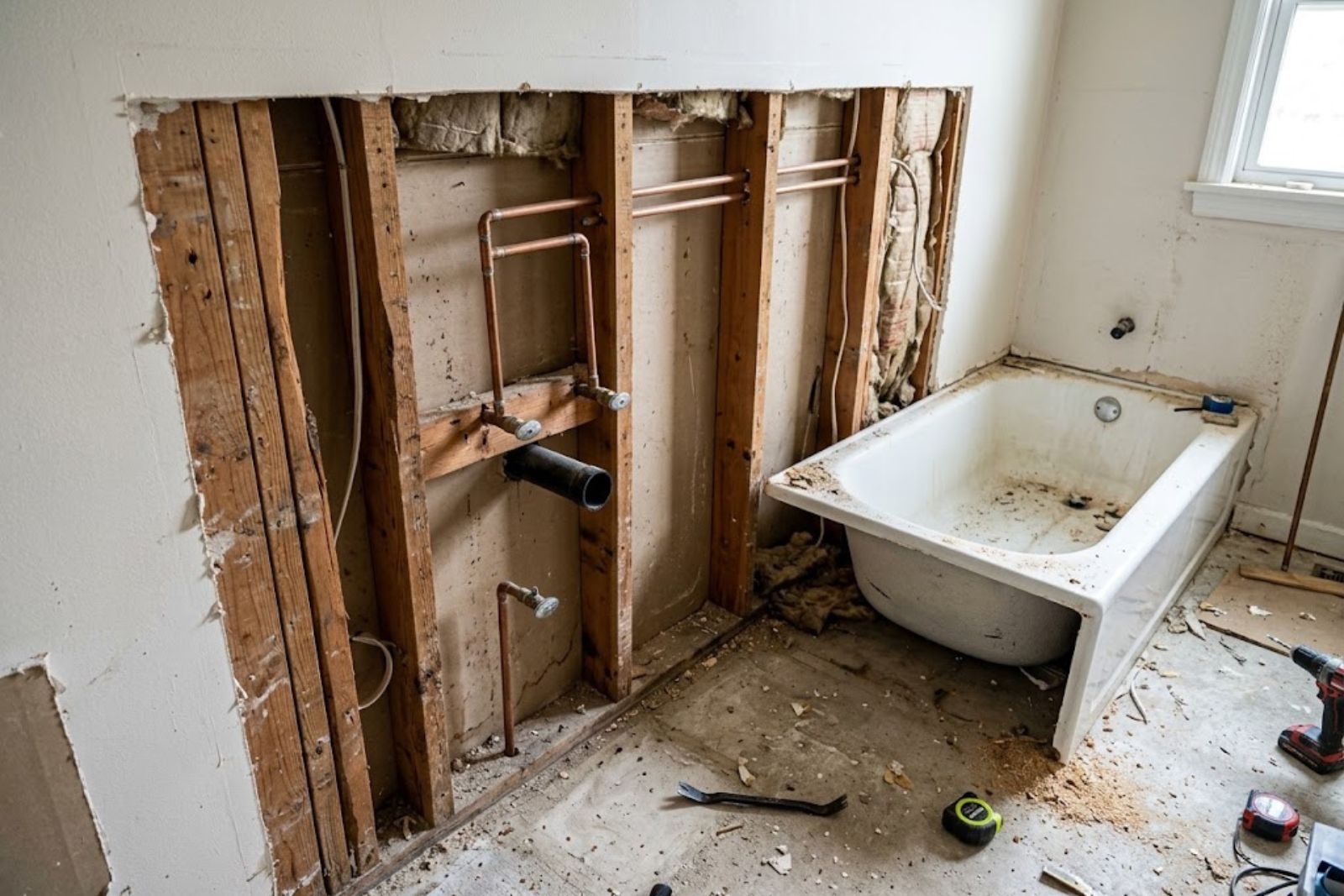
A bathroom remodel almost always involves more plumbing work than it first appears, especially in Walnut homes built during the 1970s-90s boom, where original bathroom footprints tend to be smaller than what current fixture styles and layouts assume. Moving a toilet, widening a shower, or adding a second sink usually means relocating supply and drain lines, not just swapping fixtures in place.
What Bathroom Remodel Plumbing Involves
Fixture Relocation
Moving a toilet, sink, or shower drain to a new position within the room requires rerouting supply and waste lines beneath the floor or through walls.
Shower & Tub Conversion
Converting a tub to a walk-in shower, or the reverse, changes drain placement and often the water line configuration.
New Fixture Rough-In
Adding a second sink or a standalone tub where none existed means running entirely new supply and drain lines.
Updated Shutoffs & Valves
Older shutoff valves are often replaced during a remodel since they're easier to access with walls already open.
Working With Your Contractor or Designer
Most bathroom remodels involve a general contractor or designer coordinating multiple trades. We work directly with whoever's running the project, scheduling the rough-in and final fixture connection around the drywall, tile, and flooring timeline rather than requiring you to relay information between trades yourself.
Planning A Bathroom Remodel?
We handle the plumbing rough-in and fixture installation.
Rough-In vs. Fixture Installation
Rough-In Phase
- Supply and drain line placement before walls close up
- Coordinated with the framing and drywall schedule
- Includes shutoff valve placement
Final Fixture Installation
- Connecting toilets, sinks, and shower/tub fixtures once tile and flooring are complete
- Testing all connections before the project is signed off
- Upfront price for the full scope before work begins
What Affects the Price
A remodel's plumbing scope is easiest to price accurately once the design is set, since fixture placement drives most of the cost; call (909) 505-3225 once you have a layout in mind and we can walk through what it involves before you finalize plans with your contractor.
Permits are typically required for plumbing relocation work, and we handle that as part of the project rather than leaving it for you or your general contractor to coordinate separately. Getting the permit lined up early in the process helps avoid a scheduling delay once the rough-in phase is ready to start, and it also protects you if the work is ever reviewed during a future home sale.
Timing the plumbing rough-in correctly within a broader remodel schedule matters more than most homeowners expect: work happening out of sequence with tile, drywall, or flooring almost always costs more to fix later than it would have cost to coordinate properly the first time around.
FAQs
In most cases yes, particularly for relocating supply or drain lines. We handle the permit process as part of the project scope.
Yes, we coordinate the rough-in and final fixture installation around your contractor's overall schedule rather than working independently of it.
It depends on the distance and whether the drain line needs to cross the existing slab or floor joists; a few inches costs much less than relocating it across the room.
Yes, this is one of the more common remodel requests we see, and it typically involves drain relocation and sometimes a change to the water line configuration.
Bathroom Plumbing & Remodel Across Walnut & the San Gabriel Valley
We run same-day calls throughout Walnut and nearby San Gabriel Valley communities, including Diamond Bar, Rowland Heights, La Puente, Covina, San Dimas, with a flat price confirmed before any work begins. Bigger jobs that need scheduling ahead get the same upfront pricing conversation as an emergency call. If you're not sure whether your issue fits under bathroom plumbing & remodel or something else, describe the symptom on the call and we'll point you to the right service before anyone comes out.