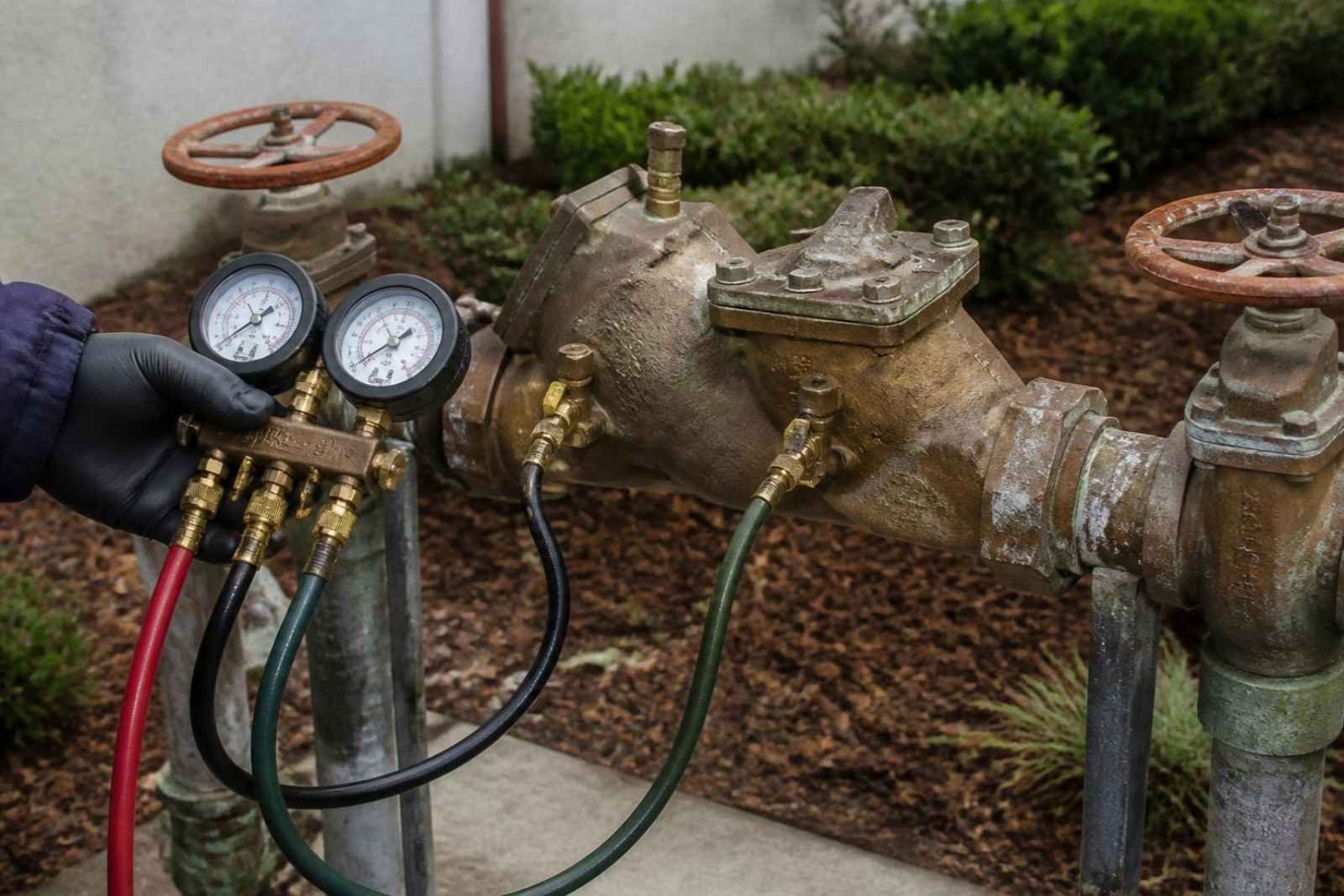
If your Walnut, CA home has an irrigation system, particularly one installed years ago as part of your property's original hillside landscaping, there's a component you may have never thought about: the backflow prevention device. It's a small, often overlooked part of the system, but it plays a genuinely important role, and older installations are more likely to need attention than newer ones.
What Backflow Prevention Actually Does
A backflow preventer stops water from flowing backward through your irrigation system into your home's clean water supply. Under normal operation, water flows one direction: from the municipal supply, through your system, out to your sprinklers. But under certain conditions, a sudden drop in municipal water pressure, for example, water can potentially flow backward, and if your irrigation system has come into contact with fertilizers, pesticides, or simply stagnant water sitting in sprinkler lines, that contaminated water could theoretically be pulled back into your home's drinking water supply without a functioning backflow preventer in place.
This isn't a hypothetical concern invented to justify a compliance requirement; it's the actual public health reason backflow prevention devices are required on irrigation systems in California and most other states.
Why Older Hillside Systems Need Extra Attention
Walnut's hillside terrain means many irrigation systems, especially in the city's older 1970s-90s neighborhoods, were installed with elevation changes across the property that affect water pressure dynamics differently than a flat-lot irrigation system would experience. Combined with the age of many original installations, now several decades old in some cases, backflow devices installed during initial construction are increasingly likely to need testing, and in some cases repair or replacement, simply due to component age.
Rubber seals and internal check valve components inside a backflow device degrade over time, the same way they do in other plumbing fixtures, and a device that was functioning correctly when installed decades ago isn't guaranteed to still be functioning correctly today without any testing or maintenance in the interim.
Is Testing Actually Required?
California's cross-connection control regulations, under Title 17 of the California Code of Regulations, generally require backflow prevention device testing, and many water purveyors require annual testing specifically for irrigation systems with their own dedicated backflow device, separate from any commercial property requirements. The exact requirement can vary by which water utility serves your specific address, so it's worth confirming directly with your provider whether annual testing applies to your irrigation system.
What the Testing Process Involves
A certified tester connects pressure gauges to your backflow device and checks that its internal check valves and relief mechanism function within required specifications, confirming the device would actually prevent backflow if the conditions that make it necessary ever occurred. The test itself is quick, typically well under an hour, and doesn't require extensive access beyond the device itself, usually located near where your irrigation system connects to your main water line.
What Happens If a Device Fails Testing
A failed test means the device isn't reliably performing its function, and repair or replacement is needed before it can be recertified. For an older device, replacement is sometimes more practical than repair, particularly if internal components have degraded broadly rather than a single isolated part needing attention. A technician can typically complete a straightforward device replacement as part of the same visit, minimizing how long your irrigation system needs to be affected while the issue is addressed.
Signs Your System May Need Attention Sooner Rather Than Later
- You don't know when, or if, your backflow device has ever been tested
- Your irrigation system was part of the home's original construction and has never had the backflow device specifically serviced or replaced
- You've received a notice from your water utility about backflow testing compliance
- You're noticing unusual water pressure or flow issues specifically related to your irrigation zones
What This Means If You're Buying or Selling a Home
Backflow device condition and testing history is worth checking during a real estate transaction for any property with an irrigation system, similar to how a home inspector checks water heater strapping. A seller addressing this proactively avoids it becoming a negotiating point during escrow, and a buyer inheriting an older irrigation system benefits from confirming the backflow device's condition and testing history before assuming it's compliant simply because the system otherwise appears to function normally.
Maintaining Compliance Going Forward
Once you know your irrigation system's backflow device is functioning and tested, staying compliant going forward is straightforward: schedule annual testing on a consistent date each year rather than waiting for a reminder notice, and keep the certification documentation somewhere you can find it if your water utility or a future buyer's inspector asks for it. This is a small, manageable maintenance item once it's on a regular schedule, and it's far easier to maintain proactively than to address reactively after a compliance notice or, worse, an actual contamination event that a functioning device would have prevented.
The Bigger Picture
Backflow prevention is one of those plumbing components that does its job silently for years and only becomes noticeable when something goes wrong or when a compliance requirement surfaces it. For Walnut's older hillside properties specifically, where original irrigation systems have often been in place for decades without dedicated attention to this specific component, a straightforward testing visit is a reasonable, low-effort way to confirm a system that's been quietly protecting your water supply actually still is.
Can You Test Backflow Devices Yourself?
Backflow testing requires certification specific to this task, since it involves confirming a safety-critical component functions correctly under controlled test conditions, and most water purveyors require the test be performed and certified by someone holding that specific credential before they'll accept the results for compliance purposes. This isn't the kind of maintenance item suited to a DIY approach the way, say, replacing a toilet flapper is; the certification requirement exists specifically because an improperly performed or interpreted test could give false confidence in a device that isn't actually functioning correctly.
What Replacement Typically Costs Compared to Repair
For an older backflow device that fails testing, the choice between repair and full replacement often comes down to the device's age and how many individual components have degraded. A single failed component on an otherwise sound, newer device is often worth repairing individually. An older device, particularly one original to a decades-old irrigation installation, more often makes sense to replace outright rather than repair, since multiple components tend to be approaching end-of-life simultaneously even if only one has technically failed the current test. A technician can walk you through which situation applies to your specific device once it's actually inspected.
How This Fits Into Broader Irrigation System Maintenance
Backflow testing is worth thinking about as one piece of a broader irrigation system maintenance routine rather than an isolated, unrelated compliance task. Checking for leaks in irrigation lines, confirming sprinkler heads are functioning and properly aligned, and testing the backflow device together, ideally on the same annual schedule, gives you a complete picture of your system's condition rather than addressing each component only when it individually becomes a problem. For older hillside systems specifically, where elevation changes across the property add complexity beyond a simple flat irrigation layout, this kind of comprehensive annual check catches issues that a purely reactive approach, waiting for a visible problem before investigating, tends to miss until they've become more significant.