When a pipe bursts or a major leak starts, the first few minutes matter more than almost anything a plumber does afterward. Knowing exactly what to shut off, and in what order, before help arrives can be the difference between a contained incident and significant water damage throughout your Walnut, CA home. This is worth reading before an emergency happens, not during one.
Step 1: Find Your Main Water Shutoff Valve Now, Not During an Emergency
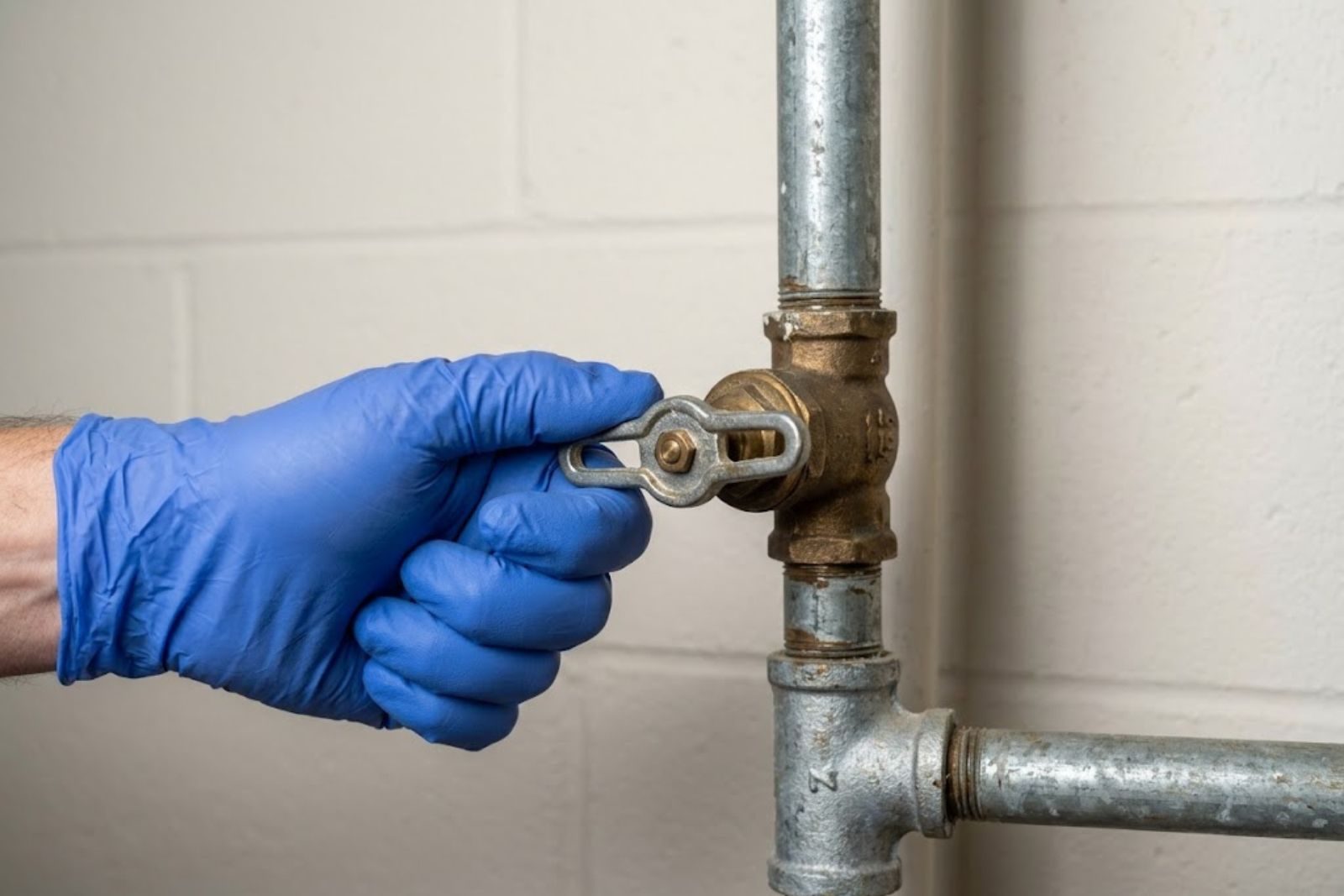
Every home has a main shutoff valve that controls all water entering the property, and locating it before you need it is the single most useful thing you can do to prepare for a plumbing emergency. In most Walnut homes, this valve is located near where the water line enters the house, often in a garage, a utility closet, or along an exterior wall near the front of the property. It's typically a lever-style ball valve (quarter-turn to close) or a round wheel-style gate valve (multiple turns to close).
Take a few minutes now to find yours, confirm which direction closes it, and make sure it actually turns without excessive force or resistance. A shutoff valve that's corroded or stuck is something worth having addressed proactively, since discovering it doesn't work during an actual emergency defeats the entire purpose of knowing where it is.
If You Have an Active Burst Pipe or Major Leak
- Shut off the main water valve immediately. This stops water flow to the entire house, which is the priority when you're dealing with a significant leak rather than a single fixture issue.
- Turn off electricity to any affected area if water is near outlets or panels. If it's safe to reach your electrical panel without walking through standing water, shut off power to the specific circuit or area affected. Never touch an electrical panel while standing in water.
- Open a faucet at the lowest point in the house. After shutting off the main valve, opening a low faucet, a basement or ground-floor sink, helps drain remaining pressurized water out of the system rather than leaving it trapped in the pipes.
- Move valuables and electronics away from the affected area if you can do so without wading through standing water or risking your own safety.
- Document the damage with photos or video before cleanup begins, useful for any insurance claim.
If It's a Single Fixture, Not a Whole-House Emergency
Not every leak requires shutting off water to the entire house. Most fixtures, toilets, sinks, and some appliances have their own individual shutoff valves, usually located directly beneath or behind the fixture. If you can identify the specific fixture causing the problem, and its individual shutoff valve is accessible and functional, closing that valve alone resolves the immediate issue without cutting off water to the rest of the house while you wait for repair.
It's worth checking now, not during an emergency, whether your toilets, sinks, and washing machine have accessible, functional individual shutoff valves. Older fixtures sometimes lack these, or have valves that have corroded shut from lack of use, which is useful information to have before you need it urgently.
If You Smell Gas
This is a different category of emergency requiring different steps, and it's important not to confuse a gas emergency with a water emergency:
- Do not operate any electrical switch, including light switches, near the smell.
- Leave the house immediately, including any pets.
- Once safely outside and away from the house, call your gas utility's emergency line (for SoCalGas customers, that's 1-800-427-2200).
- Do not attempt to locate the leak yourself or shut off gas appliances individually; let the gas company or an emergency responder handle it once you've reported it.
What NOT to Do
A few common instincts during a plumbing emergency actually make things worse:
Don't ignore a slow leak assuming it will wait. Even a modest leak causes progressively more water damage the longer it continues; shutting off water, even to just the affected fixture, while you arrange repair prevents that damage from accumulating.
Don't use electrical appliances near standing water. This includes shop vacuums or fans you might otherwise use to help dry an area, unless you've confirmed power to that area is genuinely off.
Don't assume a slab leak or hidden leak will announce itself clearly. If you suspect a hidden leak (a moving water meter with everything off, a warm spot on the floor) but can't see obvious water, that still warrants prompt attention rather than waiting for a more dramatic symptom to develop.
After You've Shut Off the Water
Once you've controlled the immediate situation, the priority shifts to getting a technician out to diagnose and repair the actual cause. Describe what happened, what you shut off, and any relevant details (whether it was a sudden burst versus a gradual worsening leak, for example) when you call, so whoever responds arrives with a clear picture of the situation rather than needing to reconstruct it on-site.
A Few Things Worth Doing Before You Ever Need This List
- Locate and test your main shutoff valve, and address it now if it's stuck or hard to turn
- Check whether your toilets, sinks, and washing machine have functional individual shutoff valves
- Save your plumber's number somewhere easy to find quickly, not just in a contacts list you'd need to search
- Know where your electrical panel is and which breakers control which areas of the house
None of this preparation takes more than twenty or thirty minutes total, and it's exactly the kind of thing that matters enormously in the specific moment you need it and essentially not at all any other time, which is precisely why it's worth doing now rather than during an actual emergency.
Why Response Time Matters So Much With Water Damage
Water damage compounds quickly in ways that aren't always obvious in the first few minutes. Beyond the immediate flooding, standing water begins wicking into flooring, drywall, and subfloor materials almost immediately, and the longer it sits, the more material ends up needing replacement rather than simple drying. Conditions favorable to mold growth can begin developing within roughly 24 to 48 hours in an affected area, which is a genuinely short window compared to how long many people wait before calling for help, especially if the initial leak seems minor. Acting within the first hour, both shutting off the water source and getting a technician started on the actual repair, makes a measurable difference in the total scope of damage compared to waiting even a few hours.
Insurance Documentation Worth Having Ready
If a plumbing emergency does cause damage, having a few things ready ahead of time makes the insurance process smoother. Knowing your policy's basic coverage for sudden water damage (most policies cover a burst pipe but exclude gradual leaks) helps set realistic expectations before you're in the middle of a stressful situation. Taking clear photos and video of the damage before cleanup begins, not after, gives your insurer or adjuster the clearest picture of the original extent of the damage. And keeping a simple record of when the emergency occurred, what you did in response, and when a professional was called, provides a useful timeline if questions come up later in the claims process.