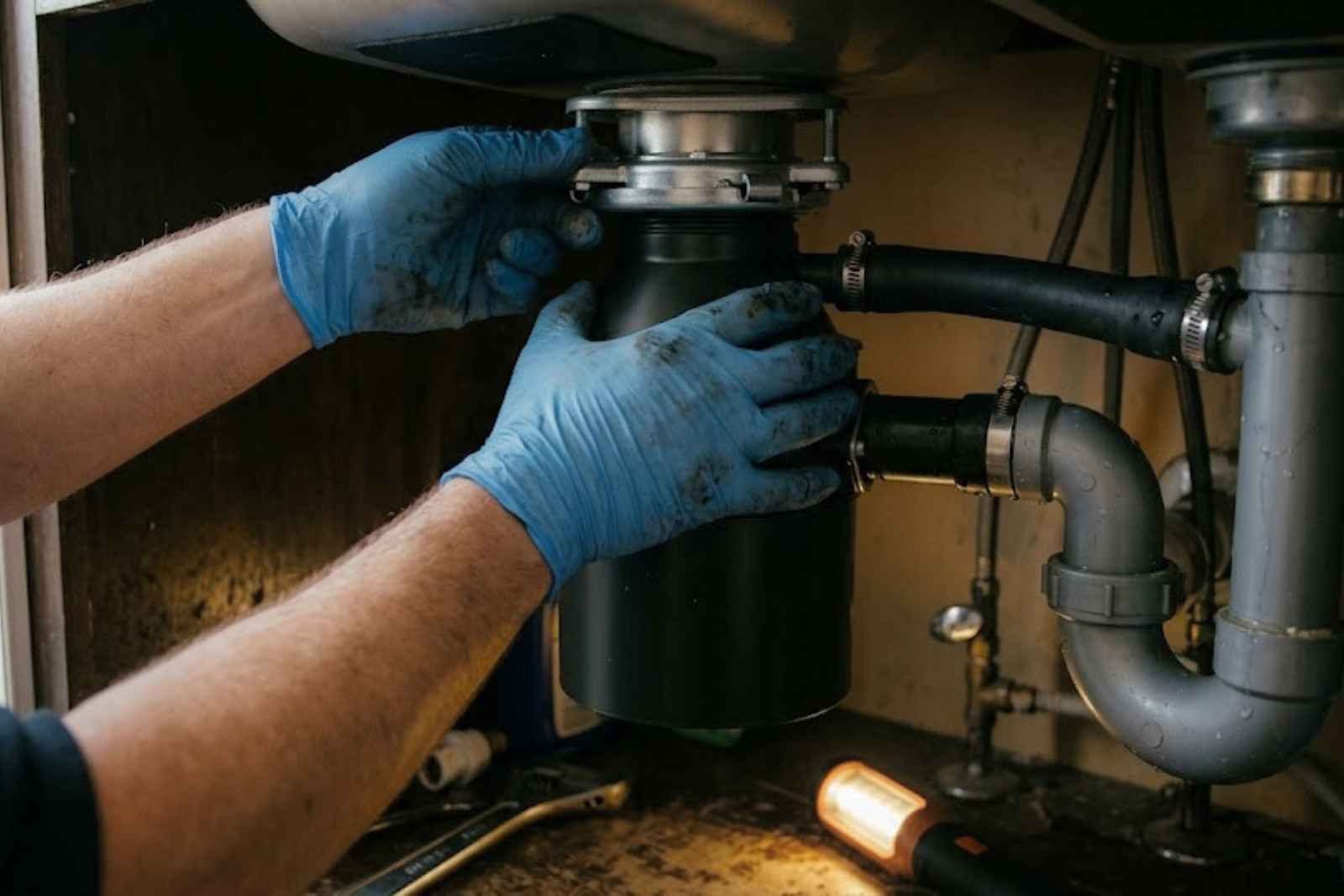
A garbage disposal that's jammed, leaking, or just gone quiet is one of the most common kitchen calls we get in Walnut, CA, and one of the easiest to misjudge from the outside. Some disposal problems are a five-minute fix; others mean the unit has genuinely reached the end of its service life. Here's how to tell the difference before you decide what to do next.
First: Is It Actually Jammed, or Something Else?
A disposal that hums but doesn't spin is almost always jammed, not broken. Before assuming the worst, here's the safe way to check it yourself:
- Turn off the disposal and unplug it, or switch off the breaker if it's hardwired.
- Never put your hand inside the disposal, even when it's off. Use a wooden spoon handle or a disposal wrench (often included with the unit) inserted into the bottom center hole to manually turn the flywheel and dislodge whatever's stuck.
- Once the flywheel turns freely, restore power and try running it again with cold water flowing.
- If it still won't spin, check the reset button, usually a small red button on the bottom of the unit. Many disposals trip this automatically when they overheat from a jam, and pressing it can restore function once the jam itself is cleared.
If this resolves the issue, the disposal itself is fine; something simply got lodged in the grinding chamber, which happens even to well-maintained units occasionally.
Signs It's Genuinely Fixable
Humming but not spinning, and the reset button hasn't been pressed. Try the above process first; this is the most common and most fixable disposal issue.
Won't turn on at all, but you haven't checked the breaker or reset button. Check both before assuming a bigger problem, since a tripped breaker or reset switch is a simple fix, not a sign of a failing unit.
Unusual noise without leaking. Often something lodged in the grinding chamber that a manual flywheel turn, done safely with power off, can dislodge.
Signs It's Time to Replace
Leaking from the bottom of the unit. This usually means a worn seal or a cracked housing, and neither is something you repair on an individual basis; the unit itself needs replacement once its housing has failed.
Leaking from the top, around where it connects to the sink. This is sometimes a loose mounting connection rather than a failed unit itself, worth checking before assuming replacement is necessary, since tightening the mounting assembly sometimes resolves it.
Recurring jams even after clearing them. If the same disposal keeps jamming repeatedly despite reasonable use, that can indicate worn grinding components inside that are no longer effectively processing waste, a sign of a unit reaching the end of its practical service life even if it technically still runs.
Burning smell or the motor runs but sounds strained. This often points to a failing motor, which isn't a repairable component on most disposal units; motor failure generally means replacement.
The unit is old and this isn't its first issue. Most garbage disposals have a realistic service life of 8-12 years. If you're facing a second or third issue on a unit already several years old, replacement is often more cost-effective than continuing to address individual failures on an aging unit.
What Actually Causes Disposals to Fail Early
A few specific habits contribute to premature disposal wear and jamming, worth knowing regardless of whether you're troubleshooting a current issue or trying to extend a new unit's life:
- Fibrous vegetable scraps like celery, corn husks, and onion skins can wrap around the grinding components rather than breaking down cleanly.
- Grease and fat solidify inside the disposal and drain line, contributing to both jams and downstream clogs.
- Large volumes of coffee grounds can accumulate into a dense sludge that's harder to process than smaller amounts.
- Hard items like bones, fruit pits, and glass fragments can damage the grinding components directly, sometimes causing immediate jamming or long-term wear.
None of this means avoiding your disposal for everyday use; it's designed to handle typical food waste. It's specifically these categories that create outsized wear and jam risk compared to normal use.
If You Decide to Replace
Replacing a disposal is also a reasonable moment to reconsider horsepower, particularly if your current unit seemed persistently underpowered for your household's actual use. A disposal that's undersized tends to jam more often under normal use, which shows up as repeat problems rather than one clear failure. If your old unit struggled even with reasonable use and proper habits, moving up in horsepower on the replacement is worth discussing rather than defaulting to an identical model.
Installing a Disposal Where One Didn't Exist Before
If you're adding a disposal to a sink that's never had one, that's a slightly different job than a straightforward swap. It typically requires confirming the sink has an accessible electrical outlet nearby (or arranging for one), and that the existing drain configuration can accommodate the disposal's connection point. Both are usually straightforward to address but worth confirming before assuming installation will be identical to a same-unit replacement.
Bottom Line
A jam is almost always worth attempting to clear yourself with power off, using the flywheel method above. A leak from the housing itself, a burning smell, or a unit already several years old facing a second or third issue point toward replacement being the more practical choice. When in doubt, describing exactly what you're experiencing, and what you've already tried, helps determine which category your situation falls into before committing to either path.
How Long Should a New Disposal Actually Last?
Most residential garbage disposals are rated for somewhere between 8 and 12 years of service life under normal use, though that range shifts significantly based on horsepower relative to household use, water hardness in the area, and how consistently the unit is run with cold water rather than hot during operation. Cold water helps solidify grease and fat so it gets chopped and flushed through rather than coating the grinding chamber and drain line, which is part of why manufacturers consistently recommend cold water use regardless of what's being disposed of.
Does Hard Water Affect Disposal Lifespan?
Indirectly, yes. Walnut's moderately hard water contributes mineral buildup throughout a home's plumbing system generally, and while a disposal's grinding chamber isn't as directly affected as, say, a water heater's internal components, the drain line downstream of the disposal can accumulate mineral scale alongside typical grease and food debris, which compounds clog risk over time. This isn't a primary cause of disposal failure the way it is for water heaters, but it's a contributing factor worth being aware of, particularly if you're already dealing with a household that shows other hard water symptoms elsewhere.
A Note on DIY Disposal Repair Kits
Various DIY repair kits exist for replacing specific disposal components, like the reset switch or certain seals, without full unit replacement. Whether this makes sense depends on the specific failure: if the issue is genuinely isolated to a single replaceable component and the rest of the unit is sound, a targeted repair can extend the unit's life reasonably. If multiple components are showing wear simultaneously, which is common once a unit approaches the end of its rated service life, a targeted repair often just delays a full replacement by a short period rather than genuinely restoring the unit's original reliability.