Walnut, CA was originally named for the walnut groves once planted across the old Rancho Los Nogales land grant, "Ranch of the Walnut Trees." Those specific trees are long gone. But the principle behind the name, mature landscaping throughout the city, is still very much present today. And that established landscaping is directly relevant to one of the most common recurring plumbing complaints we hear: a sewer line that clogs again just weeks after being snaked.
Why Roots Get Into Sewer Lines At All
Tree and shrub roots grow toward moisture and nutrients, and a sewer line, especially an older clay or cast-iron line with small joint gaps, provides both. Roots can work their way into a line through even a hairline crack or a slightly separated joint, and once inside, they don't stay small. A root that's found its way into a nutrient-rich, moist environment continues growing, gradually filling more of the pipe's interior diameter and creating an ideal snag point for paper, grease, and debris passing through the line.
This is a genuinely different problem than a typical fixture-level clog, which usually results from grease, hair, or debris accumulating close to a single fixture. Root intrusion happens further down the line, often in the main sewer line itself, and it keeps growing back even after a section is cleared, unless the underlying entry point is addressed or the interior of the pipe is actually cleaned rather than just punched through.
Why Snaking Doesn't Solve Root Intrusion
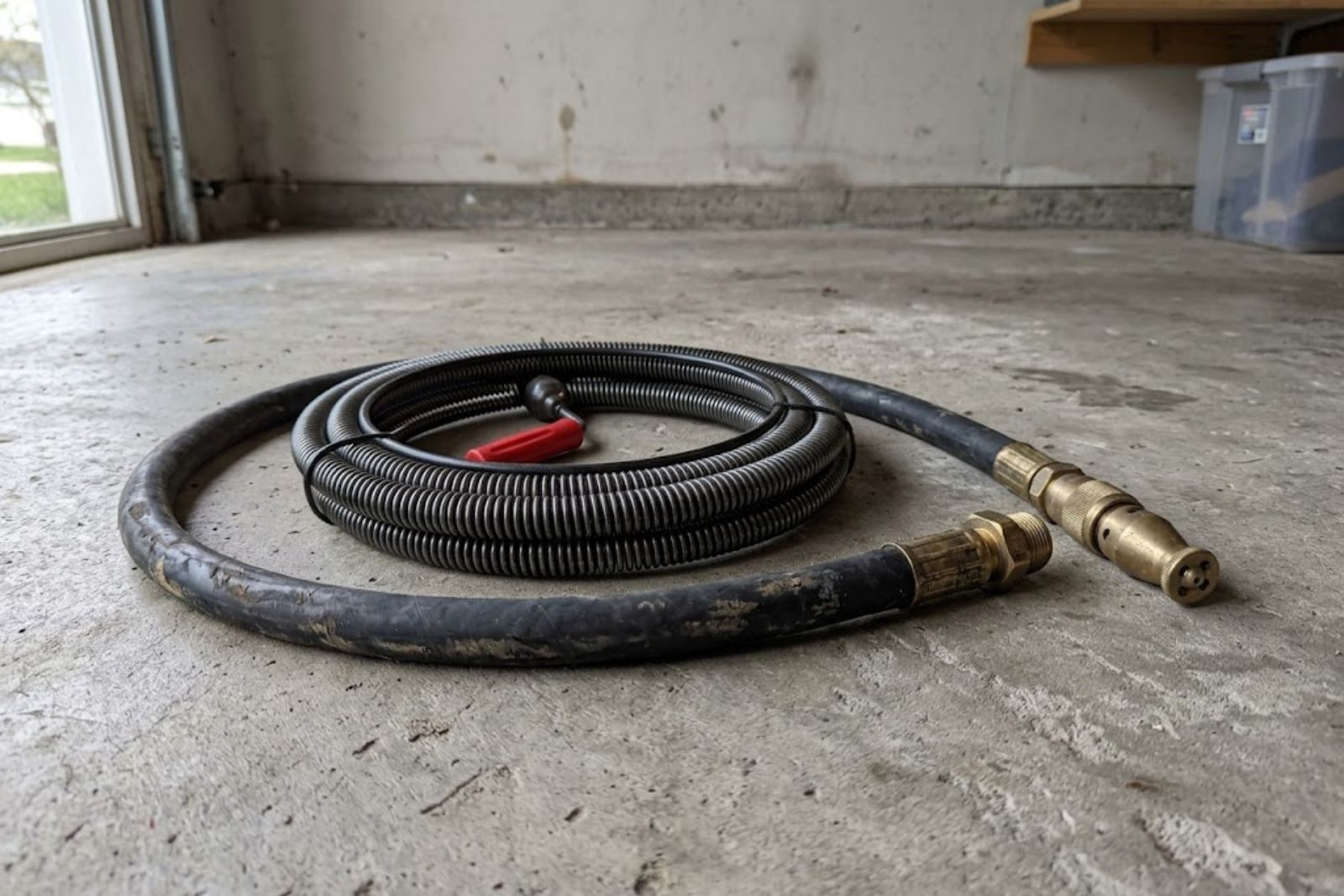
A drain snake, or cable auger, works by physically breaking through or retrieving a clog using a rotating cable. Against a typical fixture clog, this works well: the snake reaches the blockage, breaks it up or pulls it out, and the line is clear. Against root intrusion, though, a snake essentially cuts a channel through the roots filling the pipe rather than removing them from the pipe's interior wall. The line drains again, which feels like a solved problem, but the roots themselves are still attached to the pipe's interior surface and will continue growing back into that same channel, often within weeks.
This is exactly why a sewer line that "gets fixed" by snaking and then clogs again shortly after is such a common pattern. The symptom was addressed, temporarily, but the actual cause, roots growing into the pipe from an entry point somewhere along its length, was never actually removed.
How Hydro Jetting Is Different
Hydro jetting uses a specialized nozzle that sprays high-pressure water in multiple directions as it moves through the pipe, scouring the entire interior circumference rather than just punching a hole through whatever's blocking the center. Against root intrusion specifically, this matters because jetting actually strips root growth off the pipe's interior wall rather than just cutting a passage through it. The result is a genuinely clean pipe interior, not just a temporarily reopened channel.
Jetting is also effective against grease buildup, mineral scale, and general sediment accumulation for the same reason: it cleans the full interior surface rather than creating a path through the center of whatever's obstructing the line.
When Each Method Makes Sense
Snaking remains the right tool for most single-fixture clogs, a slow kitchen sink, a clogged bathroom drain, where the problem is localized and hasn't recurred. It's faster and less expensive than jetting for these situations, and there's no reason to jet a line that doesn't need the more thorough treatment.
Hydro jetting becomes the better choice once a pattern emerges: a main line that clogs again within weeks of snaking, a property with mature trees near the sewer line's path, or a commercial kitchen line dealing with ongoing grease accumulation. In these situations, jetting addresses the underlying cause rather than repeatedly treating the same symptom.
Is Jetting Safe for Older Pipes?
This is a fair question, since high-pressure water sounds like it could be risky for aging pipe. In practice, jetting is safe for sound copper, PVC, and cast iron pipe. The real risk is jetting a line that's already severely corroded or has an existing crack, since high pressure could worsen existing damage rather than causing new damage to a healthy pipe. That's why a camera inspection typically happens before jetting, to confirm the line's actual condition rather than assuming it's a good candidate based on age alone.
What a Camera Inspection Adds
Running a camera through the line before jetting accomplishes two things. First, it confirms the pipe material and condition are appropriate for jetting, avoiding the rare situation where jetting could worsen an already-compromised line. Second, it shows exactly where root intrusion or other buildup is occurring, which helps confirm jetting is actually the right solution rather than a symptom of something requiring repair instead, like a cracked or misaligned pipe section that jetting alone won't fix.
Preventing Recurring Root Intrusion
Once a line has been jetted clean, a few things help reduce the odds of the same problem recurring quickly. If a specific tree or root system was identified as the likely entry point, addressing that directly, whether through root barriers, selective root pruning, or in persistent cases considering the tree's proximity to the line, reduces future intrusion risk more than jetting alone. For properties with a known recurring root intrusion history, a periodic maintenance jetting schedule, rather than waiting for the next full backup, is often more cost-effective over time than reactive service calls each time symptoms return.
What This Means for Walnut Homeowners
If you've had a sewer line snaked more than once for the same recurring backup, that pattern itself is useful diagnostic information. It suggests the underlying cause hasn't actually been addressed, and continuing to snake the same line on the same schedule is likely to keep producing the same result. A camera inspection to confirm the cause, followed by hydro jetting if root intrusion or heavy buildup is the confirmed issue, breaks that cycle rather than continuing to manage a symptom that keeps coming back.
What Jetting Costs Compared to Repeated Snaking
It's worth running the actual math on this rather than assuming jetting is simply "more expensive." A single jetting service typically costs more upfront than a single snaking visit, but a property with genuine root intrusion that gets snaked every few months is paying for that repeated service call indefinitely, with the underlying problem never actually resolved. Compare the total cost of, say, three or four snaking visits over a year against a single jetting service that addresses the actual cause, and jetting is often the more cost-effective choice once you account for the pattern rather than treating each visit as an isolated, unrelated expense.
What If Jetting Doesn't Fully Solve It?
In some cases, a line with severe, longstanding root intrusion may have sustained enough damage that jetting alone, while it clears the current buildup, doesn't prevent roots from finding their way back in through the same compromised joint or crack relatively quickly. If that happens, it's usually a sign the underlying pipe damage needs to be repaired directly, whether through trenchless lining, pipe bursting, or in more severe cases traditional excavation and replacement, rather than continuing to jet the same damaged section repeatedly. A camera inspection after jetting can confirm whether the pipe itself is structurally sound or whether the recurring intrusion point needs a more permanent fix.
Is This Just a Walnut Problem?
Not exclusively, but the combination of mature, decades-old landscaping and aging clay or cast-iron sewer lines common across much of the San Gabriel Valley makes root intrusion a genuinely common issue throughout our service area, not just in Walnut itself. Older neighborhoods in Covina, whose 1950s postwar housing boom predates Walnut's own construction era, and La Puente, with its similarly established landscaping, see this pattern regularly as well. If you own a home in any of these areas with mature trees near your sewer line's likely path, it's a realistic consideration even if you've never had a backup yet.