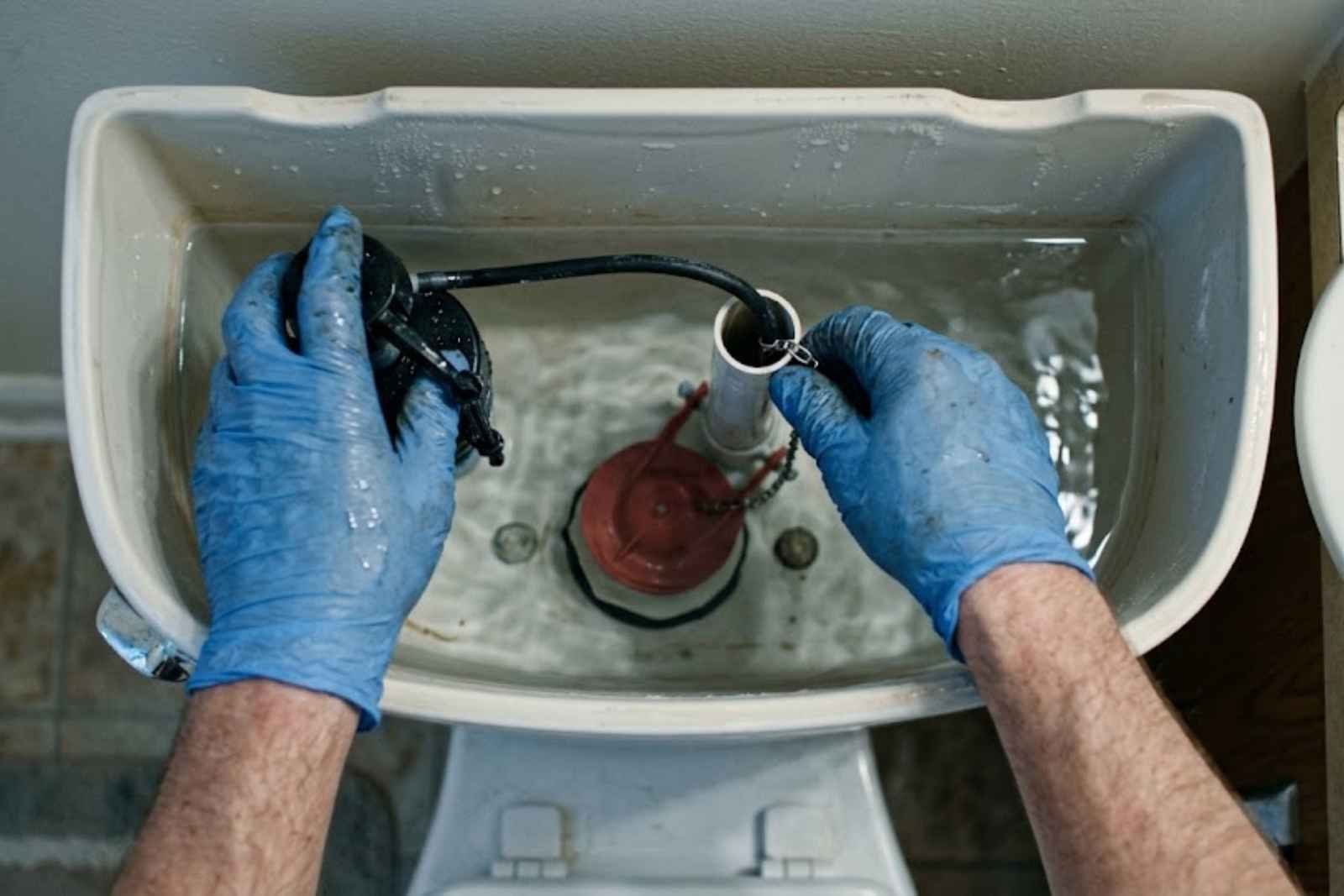
If you've noticed your water bill climbing and suspect a toilet might be the cause, you're probably right. A running or leaking toilet is the single most common source of an unexplained water bill increase we see in Walnut, CA homes. Unlike a lot of plumbing problems, it's one you can actually diagnose yourself with a simple test before deciding whether to call anyone.
Step 1: The Food Coloring Test
This is the standard way to check a toilet for a hidden leak, and it takes about fifteen minutes:
- Lift the tank lid and add a few drops of food coloring, or a dye tablet if you have one, directly into the tank water (not the bowl).
- Do not flush.
- Wait 15-20 minutes without using the toilet.
- Check the bowl. If any color has appeared in the bowl water, the toilet has a leak between the tank and bowl, meaning water is passing through when it shouldn't be.
If you have multiple toilets, test each one separately, since it's entirely possible for one to be leaking while others are fine, and testing only one won't tell you about the rest.
Step 2: Listen and Look
Beyond the dye test, a few things you can check by observation alone:
Listen for running water when the toilet hasn't been used recently. A toilet that periodically runs on its own, without anyone flushing, has a leak significant enough to trigger the fill valve intermittently.
Look at the water level in the tank. If it's below the fill line marked inside the tank, or if water appears to be trickling into the overflow tube (the open tube in the center of the tank) even when the tank is full, that points toward a specific component needing adjustment or replacement.
Check the flapper. The flapper is the rubber seal at the bottom of the tank that lifts when you flush and should seal completely afterward. A warped, cracked, or mineral-encrusted flapper often doesn't seal fully, allowing a slow, continuous trickle into the bowl.
What's Actually Causing the Leak
Once you've confirmed a leak, understanding the likely cause helps you know what to expect from a repair:
Worn flapper (most common). Flappers degrade over time from constant water exposure, and a worn one doesn't seal completely, letting water slowly leak from tank to bowl. This is usually the least expensive and most straightforward fix.
Fill valve issues. If the fill valve doesn't shut off completely, water continues trickling into the overflow tube and down into the bowl even after the tank appears full. This is a different component than the flapper and requires a different repair.
Cracked overflow tube. Less common, but a cracked or improperly seated overflow tube can let water bypass the normal fill mechanism entirely, creating a leak that isn't fixed by replacing the flapper or fill valve alone.
Warped or misaligned flush valve seat. The seat the flapper rests against can develop mineral buildup or warping over years of use, preventing a proper seal even with a brand new flapper installed on top of it.
Why a Phone Diagnosis Doesn't Work Here
It's worth understanding why "my toilet runs constantly" doesn't actually tell a plumber which part has failed. Two toilets that both exhibit the exact same symptom, running or leaking, can have completely different underlying causes, a worn flapper in one case, a cracked overflow tube in another. The only reliable way to identify which specific component has failed is opening the tank and inspecting the actual parts, which is why a repair visit typically starts with that inspection rather than assuming based on the reported symptom alone.
Is This Actually Worth Fixing, or Should I Just Replace the Toilet?
For most running toilet issues, repair is the more cost-effective choice: flappers, fill valves, and even flush valve seats are relatively inexpensive parts, and replacing them typically resolves the issue completely. Full toilet replacement becomes the more reasonable choice once a toilet is old enough that finding compatible parts becomes difficult, or once you're facing multiple unrelated issues on the same unit within a short period, suggesting the whole toilet is reaching the end of its practical service life rather than experiencing an isolated component failure.
How Much Water Does a Running Toilet Actually Waste?
More than most people expect. A toilet with a significant leak can waste hundreds of gallons per day, since the fill valve is essentially replacing water continuously to compensate for what's leaking through to the bowl. Even a slow, barely-audible leak adds up meaningfully over the course of a billing cycle. This is exactly why a running toilet shows up so reliably as an unexplained bill increase: it's not a one-time waste, it's continuous, all day, every day, until it's fixed.
What to Do If You Confirm a Leak
Once you've identified which toilet is leaking, describing what you found, whether the dye test was positive, whether you heard intermittent running, whether you noticed a specific component issue like a warped flapper, helps a technician arrive prepared rather than starting the diagnostic process from scratch. Most running toilet repairs are completed in a single visit, and addressing it promptly limits how much additional water gets wasted while you wait.
A Quick Reference Checklist
- Run the food coloring test on every toilet in the house, not just the one you suspect
- Listen for the toilet running on its own without being flushed
- Check the tank water level against the fill line marked inside
- Visually inspect the flapper for obvious wear, warping, or mineral buildup
- Note anything specific you observe before calling, since it helps speed up the diagnosis
Do Older Toilets Leak More Often?
Generally yes, though it's less about the toilet's age directly and more about how many years the same internal components, flapper, fill valve, flush valve seat, have been in continuous service without replacement. A toilet that's had its internal components replaced periodically over the years can run reliably for decades, while one that's never had any internal maintenance is more likely to develop a leak as the original rubber and plastic components degrade from constant water exposure. Rubber components in particular have a limited service life regardless of how well-built the toilet itself is, since they're simply not designed to seal perfectly forever under continuous water pressure.
Hard Water's Role in Toilet Leaks
Walnut's moderately hard water contributes to toilet component wear in a specific way: mineral deposits can accumulate on the flush valve seat, the surface the flapper rests against to form a seal, creating a slightly uneven surface that a flapper can't seal against completely even when the flapper itself is in otherwise good condition. This is one of the less obvious causes of a running toilet, and it's worth mentioning specifically if a technician replaces your flapper and the toilet continues running afterward, since it points toward the seat itself needing attention rather than another flapper replacement solving the same recurring issue.
When to Call Rather Than Keep Troubleshooting
If you've run through the checklist above and confirmed a leak but aren't comfortable opening the tank yourself, or if you've already tried replacing a flapper and the toilet is still running, that's a reasonable point to call for a proper diagnosis rather than continuing to guess at which component needs attention. A technician can identify the actual cause during a single visit, which is particularly useful once a first attempted fix hasn't resolved the issue, since it usually means the underlying cause is something other than what was initially assumed.