If you've been told your sewer line needs repair or replacement, and you're picturing your entire yard or driveway dug up for days, it's worth knowing that isn't always how it works anymore. Trenchless sewer repair can fix or replace a damaged line with minimal excavation, and for many Walnut, CA homes, it's a genuinely better option than traditional digging, though it isn't the right answer in every situation.
What "Trenchless" Actually Means
Traditional sewer line repair involves digging a trench along the entire length of the damaged pipe to access it directly. This works, but it also means tearing up whatever sits above the line: landscaping, a driveway, patio, or hardscaping, and then restoring all of it afterward, which adds both cost and time beyond the plumbing work itself.
Trenchless repair accomplishes the same goal, a functional, code-compliant sewer line, through one of two methods that require only small access points rather than a full-length trench.
Method One: Pipe Lining
Pipe lining, sometimes called cured-in-place pipe (CIPP) lining, works by inserting a flexible liner coated with resin into the existing damaged pipe. Once positioned, the liner is cured, typically using heat, UV light, or ambient curing depending on the specific product, which hardens it into a new pipe surface within the old one. The result is a smooth, continuous new pipe interior bonded to the inside of the original line.
Pipe lining works well for cracks, small root intrusion points, and general deterioration where the original pipe's basic structure and alignment are still sound. It doesn't increase the pipe's internal diameter, since the new liner takes up some of the existing space, which is a relevant consideration for a line that was already undersized for current use.
Method Two: Pipe Bursting
Pipe bursting takes a different approach: a bursting head is pulled through the existing damaged pipe, fracturing it outward into the surrounding soil, while simultaneously pulling a new pipe into the space the old one occupied. This method can actually increase the line's diameter if needed, which matters if a home's plumbing use has grown beyond what the original line was sized for, whether from a home addition, additional fixtures, or a change in occupancy.
Pipe bursting generally requires the old pipe to be a suitable material and condition for the bursting process, and it's not always the right choice for lines with significant misalignment or multiple severely compromised sections.
When Trenchless Repair Is the Right Call
- The line has isolated cracks or root intrusion points, rather than a fully collapsed section
- The line runs beneath a driveway, mature landscaping, or hardscaping you'd rather not dig up
- The overall pipe structure and alignment are still fundamentally sound
- You want to avoid the cost and disruption of restoring landscaping or paved surfaces after traditional excavation
When Trenchless Repair Isn't the Right Fit
- The line has a fully collapsed section, which needs direct access to address
- Severe bellying (sagging) has occurred along the pipe's run, since this is a structural alignment issue neither lining nor bursting corrects
- Multiple, widely separated failure points exist along the same line
- The existing pipe material or condition isn't suitable for the specific trenchless method being considered
This is exactly why a camera inspection happens before recommending either trenchless method: it confirms which category your specific situation falls into rather than assuming trenchless is automatically the right choice just because it's less disruptive.
Cost Comparison: Trenchless vs. Traditional
It's a common assumption that trenchless repair costs more than traditional digging, and the material and equipment costs for trenchless methods can indeed run higher on a straightforward comparison. But that comparison misses the full picture. Traditional excavation adds the cost of restoring whatever was above the line: repaving a driveway section, replacing mature landscaping, repairing a patio or walkway. Once you account for full restoration costs, trenchless repair often comes out comparable to or less expensive than traditional excavation, particularly when the line runs beneath anything costly or difficult to restore.
How Long Does It Take?
Most trenchless jobs are completed within a single working day, a meaningful difference from traditional excavation and restoration, which can take considerably longer once you factor in restoring hardscaping or landscaping afterward. For a property owner needing sewer service restored quickly, that timeline difference is often as significant as the cost comparison.
Does Trenchless Repair Last As Long As New Pipe?
Both pipe lining and pipe bursting are designed to create a durable, long-lasting new pipe surface or new pipe entirely, with service life expectations comparable to traditional new pipe installation under normal conditions. The right method for your specific situation depends on the existing line's condition, which is confirmed through camera inspection before either method is recommended, rather than defaulting to whichever method happens to be more familiar or convenient to perform.
What to Expect From the Process
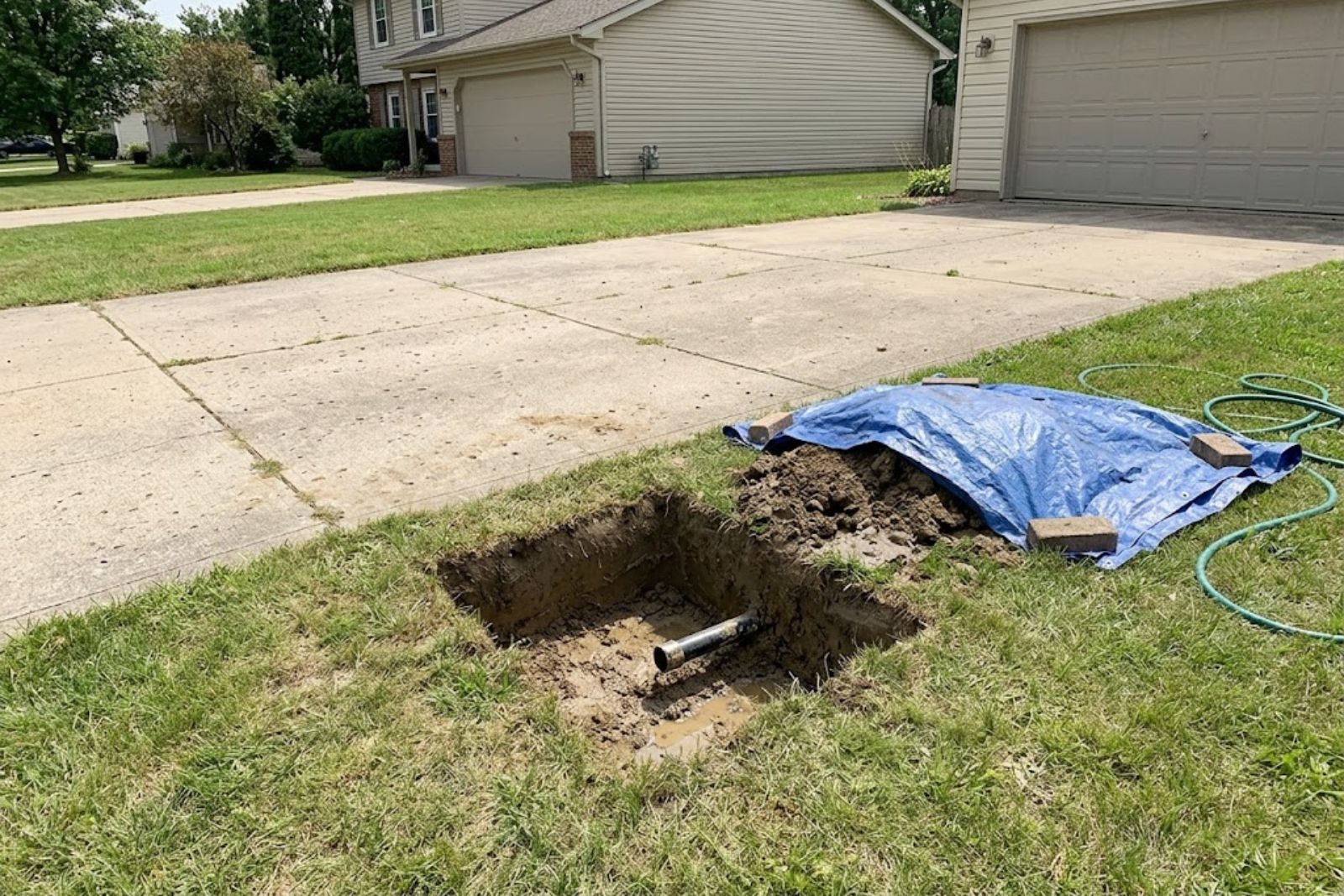
A trenchless sewer repair typically starts with a camera inspection to confirm the line is a good candidate and to determine which method fits the specific damage found. Small access points are then excavated, usually just large enough to insert equipment rather than exposing the pipe's full length. The lining or bursting process itself follows, and the job typically concludes with a final camera inspection confirming the repair or replacement was completed successfully before the access points are closed and any minimal surface restoration is completed.
Getting an Honest Recommendation
Because trenchless methods sound appealing, less digging, less disruption, it's worth making sure whoever's recommending a repair method is doing so based on an actual camera inspection of your specific line's condition, not simply defaulting to trenchless because it's the more modern-sounding option. A camera inspection that clearly identifies the type and location of damage, followed by a straightforward explanation of why one method fits your situation better than the alternative, is what an honest recommendation looks like, whether it points toward trenchless repair or, in cases where the damage warrants it, traditional excavation instead.
Why This Matters More in Established San Gabriel Valley Neighborhoods
Walnut and the surrounding communities we serve share a common feature relevant here: mature, decades-old landscaping across much of the residential housing stock. That same landscaping that gives these neighborhoods their established character is also what tends to send roots into aging sewer lines in the first place, and it's exactly the kind of feature homeowners don't want disturbed by a traditional excavation. A mature tree that's taken decades to establish doesn't recover the same way a section of lawn does after a repair, which is a real, non-financial cost worth weighing alongside the straightforward dollar comparison between trenchless and traditional methods.
Permits and Inspection Requirements
Sewer line work, trenchless or traditional, typically requires a permit from the local building department, along with a final inspection confirming the completed work meets code. This isn't optional paperwork; it protects you as the homeowner by ensuring the repair was done to a verified standard, which matters both for your own peace of mind and for any future home sale, when a permitted repair with proper documentation is viewed very differently by a buyer or inspector than undocumented work. A reputable plumber handles this process as part of the project rather than treating it as an optional add-on you'd need to arrange separately.
What Happens If the Camera Finds Multiple Issues
Sometimes a camera inspection reveals more than one problem along the same line: a root intrusion point near one section and a separate area of general deterioration further along, for example. In these cases, the repair approach sometimes needs to address different sections differently, lining one portion while a more severely damaged section requires bursting or even traditional excavation. This is part of why the inspection step matters as much as it does: it prevents a one-size-fits-all repair approach on a line that actually has multiple distinct issues needing individually appropriate solutions.