A slab leak happens when a water line running beneath a home's concrete foundation develops a leak, and because it's under the slab, it rarely announces itself the way a visible pipe leak would. In Walnut, CA, where walnut's housing stock mostly dates from the 1970s-90s building boom, original copper supply lines are old enough that a slab leak is a realistic, not theoretical, possibility on a home that's never had one before.
Why Slab Leaks Happen Here
Two local factors compound each other: Walnut Valley Water District's Annual Water Quality Report classifies local water as moderately hard, and mineral-heavy water is a known contributor to internal pipe corrosion over decades. Combined with supply lines now 30-50 years old, that's why we specifically check for slab leak risk on older-home visits, not just react to a reported symptom.
Signs of a Slab Leak
Warm Spot on the Floor
Especially near a water heater or a hallway where a hot-water line runs beneath the slab.
Rising Water Bill
A bill that climbs with no change in household water use, confirmed by a moving meter with everything off.
Sound of Running Water
Audible water movement when no fixture is in use is a strong indicator of an active leak somewhere in the line.
Cracks in Flooring or Baseboards
Sustained moisture beneath a slab can eventually show up as flooring damage or baseboard separation.
If You Suspect an Active Slab Leak
Repair Options
Slab Penetration
- Opens the specific confirmed section of concrete to access the pipe directly
- Straightforward for a single, well-located leak
- Requires patching the slab and flooring afterward
Reroute (Above-Slab)
- Reroutes the line through walls or attic space instead of cutting concrete
- Often faster with less flooring disruption
- Can be the better option when a line has multiple weak points
Warm Spot Or High Bill?
A diagnostic visit confirms it before anything gets opened up.
Most homeowner's policies cover sudden water damage from a slab leak but not the gradual leak or locating it; ask your technician what's typically reimbursable. For an HOA or rental property in Walnut, call (909) 505-3225 and we can document findings for the claims process.
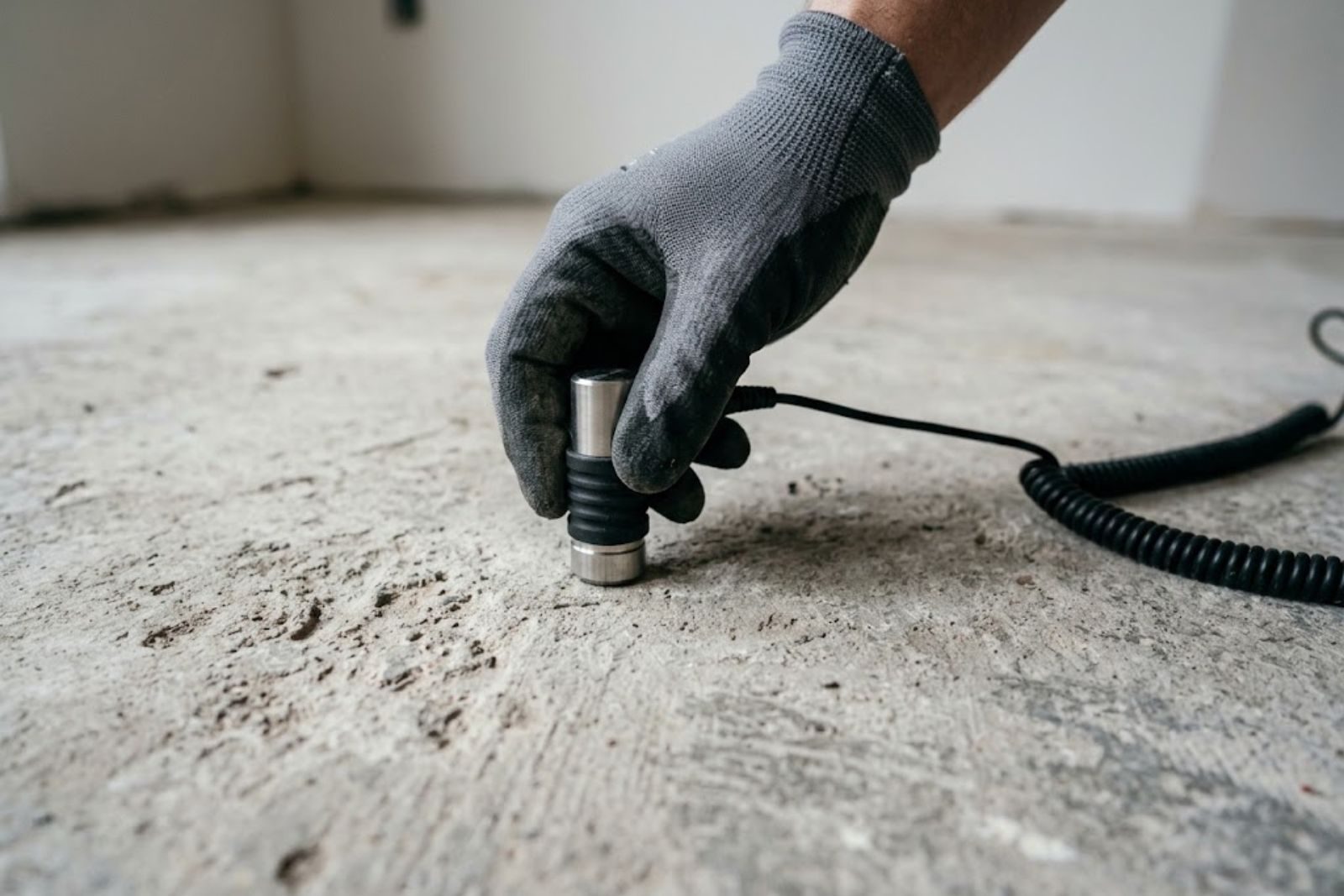
A slab leak diagnosis is only as good as the equipment behind it. Acoustic detection listens for the distinct sound of pressurized water escaping through a pinhole, while a pressure test isolates sections of the line to narrow down which run is actually affected. Used together, they typically narrow a leak to within a small, specific area of slab rather than an entire room, which is what keeps the repair itself from turning into a larger project than it needs to be.
FAQs
Electronic leak detection uses acoustic sensors and pressure testing to narrow the leak to a specific point before any concrete is opened.
It depends on the line's condition. A single, well-located leak in an otherwise sound line often makes direct repair the simpler choice; a line with multiple weak points is often better rerouted.
It varies widely, but a moving meter with everything off, or a bill that climbs with no usage change, are the clearest early signs before it becomes a larger loss.
Prolonged, unaddressed moisture under a slab can eventually affect flooring and, in more severe cases, subgrade soil, which is why early detection matters.
Slab Leak Detection & Repair Across Walnut & the San Gabriel Valley
We run same-day calls throughout Walnut and nearby San Gabriel Valley communities, including Diamond Bar, Rowland Heights, La Puente, Covina, San Dimas, with a flat price confirmed before any work begins. Bigger jobs that need scheduling ahead get the same upfront pricing conversation as an emergency call. If you're not sure whether your issue fits under slab leak detection & repair or something else, describe the symptom on the call and we'll point you to the right service before anyone comes out.