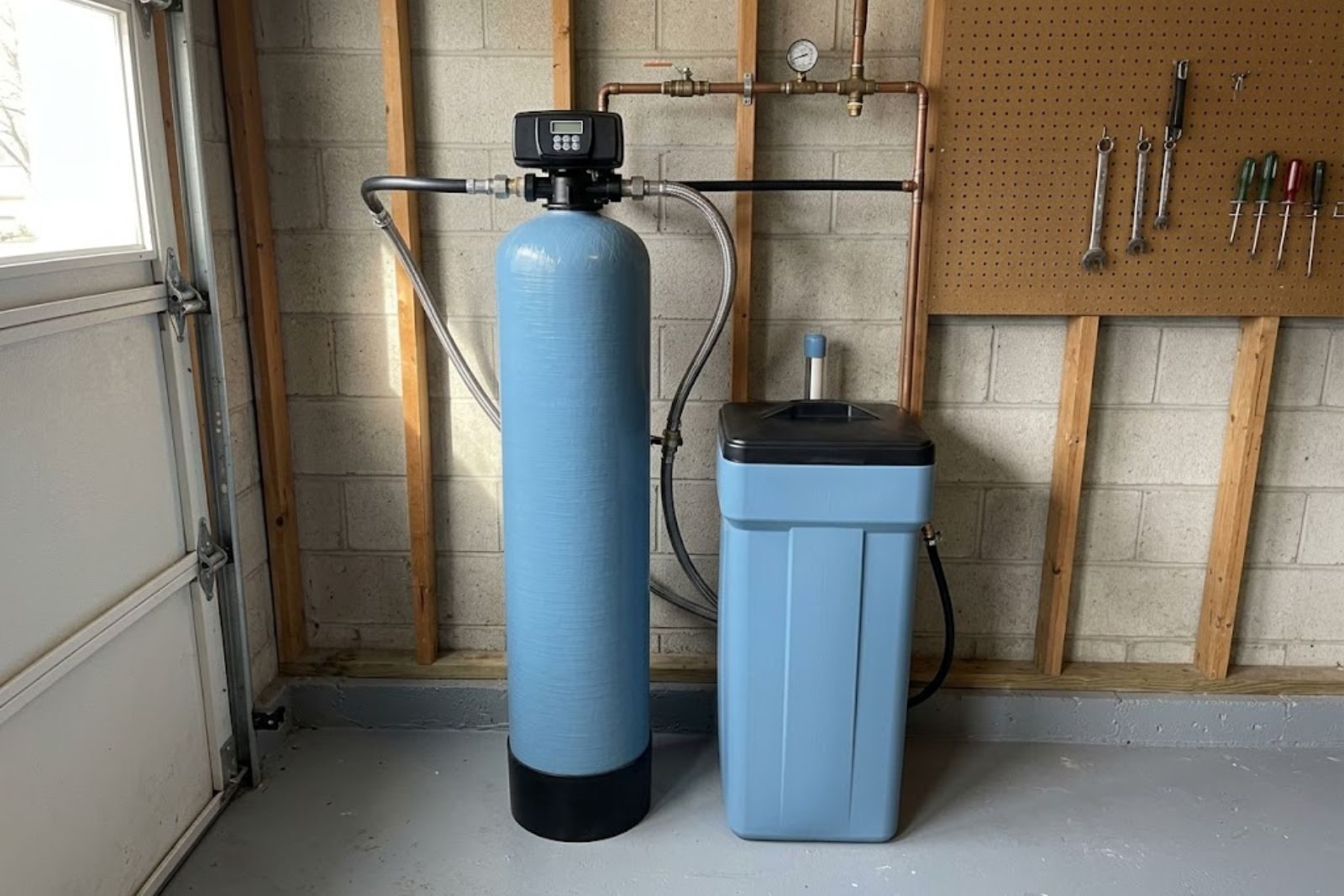
Walnut Valley Water District's Annual Water Quality Report classifies local water as moderately hard, which shows up as mineral scale on faucets and showerheads, soap that doesn't lather as easily, and appliances, especially water heaters and dishwashers, that wear out faster than their rated life would suggest. A whole-home water softener addresses the mineral content at the source rather than treating each symptom separately.
Signs Your Home Could Benefit
Hard water symptoms tend to build gradually, so it's easy to attribute them to normal wear rather than recognizing the underlying cause. The signs below are the ones we hear about most often from Walnut households before they decide to install a softener.
White Scale Buildup
Chalky white deposits around faucets, showerheads, and inside the dishwasher are a direct sign of hard water mineral content.
Dry Skin & Dull Hair
Hard water can leave a mineral film on skin and hair that regular soap and shampoo don't fully rinse away.
Appliances Wearing Out Early
Water heaters, dishwashers, and washing machines all see accelerated internal wear from mineral buildup.
Spotty Dishes and Glassware
Mineral deposits left behind after the dishwasher cycle are one of the most visible everyday signs.
How a Softener Works
A whole-home softener uses an ion-exchange process to swap calcium and magnesium minerals for sodium or potassium ions before water reaches your fixtures. It's installed at the point where the main line enters the home, so every fixture benefits rather than just one, from the kitchen sink to the water heater to every shower in the house.
Tired of Scale Buildup?
A whole-home softener addresses hard water at the source.
What Affects the Price
A softener is an investment that pays back gradually through extended appliance life and reduced scale buildup rather than an immediate visible fix; we'll walk through realistic expectations before you commit to a system size. Call (909) 505-3225 for a recommendation based on your household's actual water use.
Salt-based softeners need periodic salt refills and occasional resin bed maintenance, while salt-free conditioners use a different process that alters mineral behavior without removing it entirely; each has trade-offs worth discussing based on your household's priorities and maintenance tolerance before choosing one over the other.
Households already using bottled or filtered drinking water sometimes assume a softener is unnecessary, but softening addresses whole-home use, everything from showers to laundry to dishwashing, not just drinking water. The two are complementary rather than substitutes for each other, and a lot of households in Walnut end up wanting both once they understand the distinction.
FAQs
Chalky white scale on faucets and in the dishwasher, appliances wearing out faster than expected, and dry skin or dull hair after showering are all common signs of hard water worth addressing.
Salt-based systems use ion exchange to actually remove hardness minerals and need periodic salt refills. Salt-free conditioners alter how minerals behave without removing them and need less ongoing maintenance.
Existing scale buildup on fixtures and in pipes won't disappear immediately, but a softener stops new buildup from accumulating and gradually improves the situation over time.
Salt-based systems typically need a salt refill every few weeks to a couple of months depending on household use, plus occasional resin bed service every several years.
Yes, softening and filtration are commonly installed together, with the softener typically placed first in the line so filtration can handle taste and quality afterward.
Water Softener Installation Across Walnut & the San Gabriel Valley
Coverage extends across Walnut and the San Gabriel Valley, including Diamond Bar, Rowland Heights, La Puente, Covina, San Dimas. Whether it's a same-day fixture repair or a larger job booked in advance, the price gets confirmed with you before a technician starts any work. If you're not sure whether your issue fits under water softener installation or something else, describe the symptom on the call and we'll point you to the right service before anyone comes out.