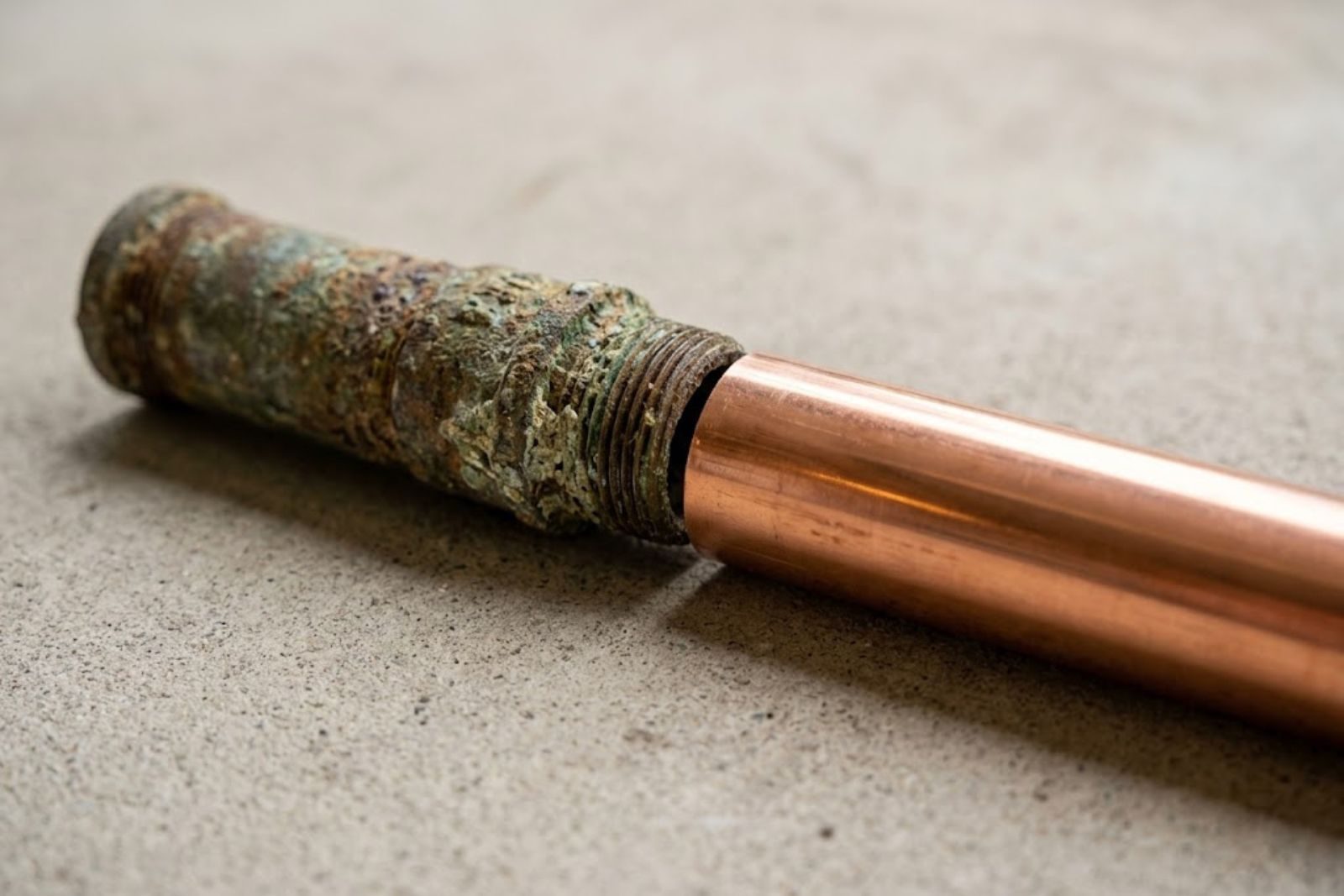
Every water supply pipe has a realistic service life, and most homeowners never think about it until something goes wrong. If you live in Walnut, CA, or a surrounding San Gabriel Valley community we serve, understanding roughly how old your home's plumbing is, and what that age actually means, helps you tell the difference between a normal isolated repair and a sign that bigger work is coming.
What Pipe Material Tells You About Age
The material your home's supply lines are made from is a strong clue to when they were installed, since building practices shifted over the decades. Homes built before the 1960s commonly used galvanized steel pipe, which is now old enough almost everywhere that it's reaching or has passed the end of its realistic service life. Homes built from the 1960s through the 1990s, which describes most of Walnut's own housing stock, typically used copper, which has a longer service life than galvanized steel but isn't immune to age-related failure, especially in areas with harder water. Homes built more recently increasingly use PEX, a flexible plastic tubing that resists the mineral-related corrosion that affects metal pipe.
Why Galvanized Steel Fails First
Galvanized pipe is steel with a zinc coating meant to resist corrosion. Over decades, that zinc coating wears away, and once it does, the steel underneath begins rusting from the inside. This process is invisible from outside the pipe and often invisible from the outside of your home entirely, since the pipe is corroding from the inside surface outward. The telltale signs are usually reduced water pressure, as the pipe's internal diameter effectively shrinks from accumulated rust and scale, and discolored water, particularly a rust-tinted color that shows up right after the water's been off for a while.
Galvanized pipe's realistic service life runs somewhere in the 40-50 year range under typical conditions, and it's often shorter in areas with harder water, since mineral buildup compounds the internal corrosion process. If your home still has original galvanized supply lines, they're very likely past or approaching the end of that window regardless of whether you've had an obvious failure yet.
Why Copper Lasts Longer, But Still Isn't Forever
Copper is more corrosion-resistant than galvanized steel and generally has a service life in the 50-70 year range under good conditions. But "good conditions" is doing real work in that sentence. Walnut Valley Water District's Annual Water Quality Report classifies local water as moderately hard, and mineral-heavy water is a known contributor to internal pipe corrosion in copper over time, meaning a copper system in this area may not reach the upper end of that lifespan range without some acceleration of the aging process.
Copper failures tend to show up differently than galvanized failures: rather than gradual pressure loss, copper more often shows pinhole leaks, small perforations that develop at specific weak points, often related to water flow patterns, joint stress, or localized corrosion. A single pinhole leak isn't necessarily a sign your whole system is failing, but a pattern of multiple pinhole leaks in different locations over a relatively short period is a meaningful signal that the broader system is reaching the end of its useful life.
Signs Your Plumbing System May Be Reaching End of Life
- Multiple leaks in different locations within a year or two, rather than a single isolated incident
- Persistently low water pressure across multiple fixtures, not just one
- Discolored water, particularly rust-tinted water after the supply has been off
- Visible corrosion, greenish or bluish staining, on exposed copper fittings or connections
- A noticeable, unexplained increase in your water bill suggesting an undetected leak somewhere
Any one of these signs on its own might just mean an isolated repair is needed. Several of them together, especially recurring in different parts of the same home, point toward a system-wide issue worth addressing more comprehensively rather than continuing to chase individual failures as they appear.
Repair vs. Repipe: How to Decide
This is genuinely a judgment call that depends on your specific situation, not a fixed rule. A single leak in an otherwise healthy system is almost always worth simply repairing. But once you're facing a second or third unrelated leak within a relatively short window, it's worth stepping back and asking whether you're paying for a series of individual repairs on a system that's fundamentally reaching the end of its service life, versus making a larger but more permanent investment in replacing the whole system at once.
There's a real financial calculation here: the cost of one repiping project, done once, against the cumulative cost of repeated spot repairs plus the water damage risk each new leak carries before it's discovered. For a home with genuinely aging, near-end-of-life plumbing, that math often favors addressing the whole system rather than continuing to patch individual failures as they arise.
What Repiping Actually Involves
A whole-home repipe replaces your home's supply lines, typically with either copper or PEX, and usually happens in a matter of days rather than weeks for a typical single-family home. It involves opening sections of wall to access the old lines, running new piping, and then patching and closing the wall sections afterward. Most plumbers coordinate the drywall patching as part of the project, though paint-matching and any cosmetic finishing is sometimes handled separately.
The choice between copper and PEX for a repipe often comes down to a few factors: PEX is generally faster to install, since it requires fewer joints and can often be run in longer continuous sections, which typically translates to a lower overall project cost. Copper has a longer track record and is preferred by some homeowners for that reason, along with certain code or insurance considerations that vary by jurisdiction and carrier.
If You're Not Sure Where Your Home Stands
If you don't know what material your home's pipes are made of, or roughly how old they are, that's a reasonable thing to have assessed before you're dealing with an active leak. A plumber can typically identify pipe material and get a reasonable sense of overall system condition during a standard service visit, which gives you useful information for planning purposes even if nothing is actively wrong right now. Understanding roughly where your home's plumbing stands in its realistic lifespan helps you plan for eventual repiping proactively rather than reactively, in the middle of an active leak with water already causing damage.
What This Means Across Our San Gabriel Valley Coverage Area
Pipe age varies more by city than you might expect across the communities we serve. Covina's significant 1950s postwar housing wave means original galvanized lines are more common there than in Walnut itself, which built out mostly in the 1970s-90s and skews toward original copper. Diamond Bar and San Dimas, both incorporated closer to Walnut's own timeline, generally share a similar copper-era construction profile. Knowing which era your specific home falls into is more useful than assuming based on the city's general reputation, since individual homes and even individual additions can vary from the surrounding neighborhood's typical construction date.
If you're weighing a repipe against continued spot repairs and want a straightforward assessment of where your home's plumbing actually stands, describing your home's age, symptoms, and repair history during a service call gives a technician enough to offer a realistic recommendation before you commit to either path, rather than guessing based on symptoms alone or assuming the worst without an actual assessment.