If you own a home in Walnut, CA built during the city's main development wave in the 1970s through 1990s, there's a specific plumbing risk worth understanding even if you've never had a problem. It's called a slab leak: a leak in a water line running beneath your home's concrete foundation. It's not an inevitability, but the combination of your home's age and the local water conditions makes it a realistic consideration rather than a rare fluke.
Why Age and Water Quality Combine Here Specifically
Two facts about Walnut compound each other in a way worth understanding. First, most of the city's housing dates from that 1970s-90s building boom, which means original copper supply lines running beneath slab foundations are now 30-50 years old, well within the range where age-related pinhole leaks become realistic. Second, Walnut Valley Water District's Annual Water Quality Report classifies local water as moderately hard, and mineral-heavy water is a known contributor to internal pipe corrosion over decades, on top of ordinary age-related wear. Neither factor alone would necessarily cause a problem, but together they explain why slab leaks show up more in a city like this one than they might in a newer development with different water conditions.
What a Slab Leak Actually Is
Most homes built with a slab-on-grade foundation, common throughout the hillside construction across Walnut and the broader San Gabriel Valley, run their water supply lines directly beneath the concrete slab rather than through an accessible crawlspace. When one of these lines develops a leak, whether from a pinhole corrosion point, a joint failure, or physical damage from ground movement, the water has nowhere obvious to go except into the soil beneath the slab or, eventually, up through the concrete itself.
Because the leak is invisible by definition, unlike a leak under a sink or behind a visible pipe, a slab leak often goes unnoticed for weeks or months before it produces a symptom obvious enough to prompt a call. That delay is exactly why understanding the warning signs matters: catching one early means a smaller, more contained repair instead of a larger one after sustained water exposure has caused secondary damage.
The Warning Signs
A warm spot on the floor. If a hot water line is the one leaking, the escaping water can warm the surrounding slab and flooring, creating a noticeably warm patch, often near a water heater or along a hallway where a hot water line runs. This is one of the more distinctive slab leak signs, since it doesn't happen with most other plumbing problems.
A water bill that climbs with no explanation. If your household's water use hasn't changed but your bill has increased, and you've confirmed the water meter continues moving even with every fixture in the house turned off, that's strong evidence of an active leak somewhere in the system, and a slab leak is one of the more likely culprits given your home's age and construction.
The sound of running water with nothing on. Some slab leaks are audible if the leak is significant enough and you're in a quiet room near the affected area. It's not a reliable indicator on its own, since it depends heavily on leak size and proximity, but it's worth investigating if you notice it.
Cracked flooring or separating baseboards. Sustained moisture beneath a slab can, over time, cause visible flooring damage or cause baseboards to separate slightly from the wall. This is typically a later-stage sign, meaning the leak has likely been active for a while by the time it produces this symptom.
What Happens If You Ignore It
A slab leak doesn't resolve on its own, and the consequences of leaving one unaddressed compound over time in a few specific ways. The immediate cost is wasted water, which shows up directly on your utility bill. Beyond that, sustained moisture beneath a slab creates conditions favorable to mold growth, particularly if the moisture eventually reaches flooring materials or wall cavities. In more severe, longer-term cases, sustained soil saturation beneath a foundation can contribute to structural settling issues, though this represents a more extreme outcome than most slab leaks reach before they're discovered.
How a Slab Leak Gets Diagnosed
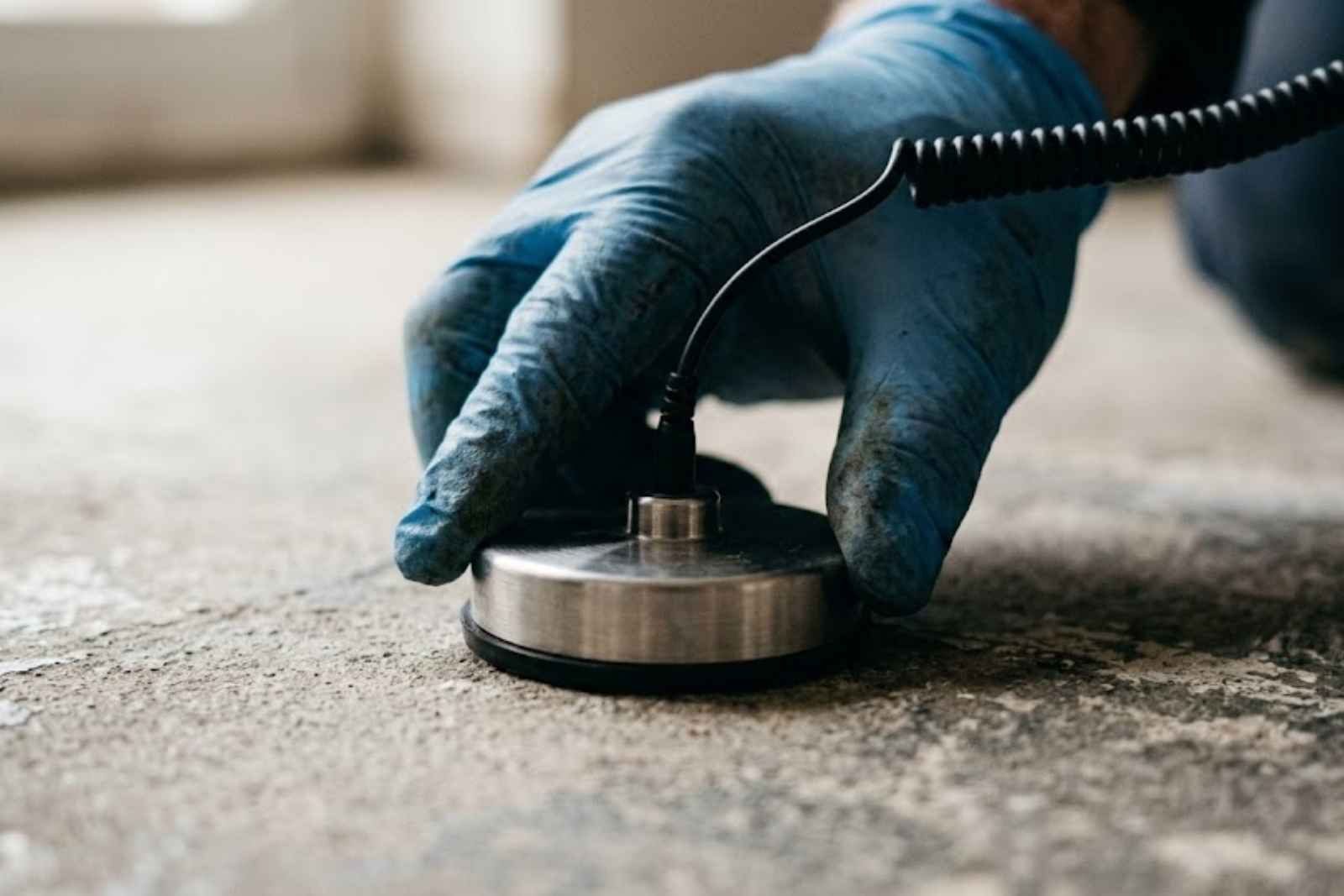
Modern leak detection doesn't require guessing where to break up your floor. Electronic leak detection uses acoustic sensors, which listen for the specific sound signature of pressurized water escaping through a small opening, combined with pressure testing, which isolates sections of the plumbing system to narrow down which specific run is affected. Used together, these methods typically narrow a slab leak's location to a small, specific area rather than requiring exploratory demolition across an entire room.
Repair Approaches
Once a slab leak is located and confirmed, there are generally two paths forward. The first is direct slab penetration: opening the specific confirmed section of concrete to access and repair the damaged pipe directly, then patching the slab and flooring. This works well for a single, well-located leak in an otherwise sound line.
The second approach is rerouting the line above the slab, through walls or attic space, rather than repairing the section beneath the concrete. This avoids cutting into the foundation at all and can be the more practical choice when a line shows multiple weak points rather than a single isolated failure, or when minimizing floor disruption is a priority.
A Word About Insurance
Most homeowner's insurance policies cover sudden, accidental water damage, such as flooring damage from a burst pipe, but typically exclude the gradual leak itself or the cost of locating it, since that's generally categorized as maintenance rather than sudden damage. Coverage specifics vary significantly by policy, so it's worth confirming what your specific policy actually covers before assuming either way, and documenting any visible damage with photos before repairs begin if you plan to file a claim.
Should You Get Proactively Checked?
If your Walnut home is within that 1970s-90s construction window and you haven't had any slab leak symptoms, proactive testing isn't strictly necessary, but it's a reasonable consideration if you're planning a major renovation, preparing to sell, or simply want peace of mind given your home's age. If you've noticed any of the warning signs above, that's a more urgent situation worth addressing directly rather than waiting to see if it resolves on its own, since slab leaks by their nature only get more expensive to address the longer they continue.
If You Suspect an Active Slab Leak Right Now
- Check your water meter with every fixture in the house turned off; continued movement confirms an active leak somewhere in the system.
- If the meter is moving and you can safely reach it, shutting off the home's main water valve stops further loss while you schedule a diagnostic visit.
- Don't cut into the slab yourself; opening concrete before the leak is located usually means opening the wrong spot.
- Photograph any visible flooring damage or warm spots before repairs begin, in case you file an insurance claim.
What Drives the Cost of a Slab Leak Repair
A few specific factors determine what a given slab leak repair actually costs, and understanding them helps set realistic expectations before a technician arrives. The leak's location relative to access points matters: a leak near an exterior wall or existing access point is generally more straightforward to reach than one in the center of a large slab. Flooring type above the affected area also factors in, since tile or hardwood requires more careful removal and restoration than carpet or vinyl. The repair method itself, direct slab penetration versus an above-slab reroute, carries different cost structures depending on the specific situation, and a technician should walk you through why one method fits your case better than the other rather than defaulting to whichever is more convenient to perform.
Preventing Future Slab Leaks
While you can't eliminate the underlying age and water-quality factors that make slab leaks a realistic risk in older Walnut homes, a few steps genuinely help reduce the odds of a future occurrence. Addressing water hardness at the source with a whole-home softener slows the mineral-related corrosion process inside existing copper lines. Monitoring your water meter periodically, checking for movement when all fixtures are off, catches a new leak early rather than after it's caused significant damage. And if your home has already had one slab leak, discussing whether a broader repiping approach makes more sense than repeated spot repairs is a reasonable conversation to have with whoever addresses the initial leak, since a system already showing one failure point is statistically more likely to show another given the same underlying age and water conditions.