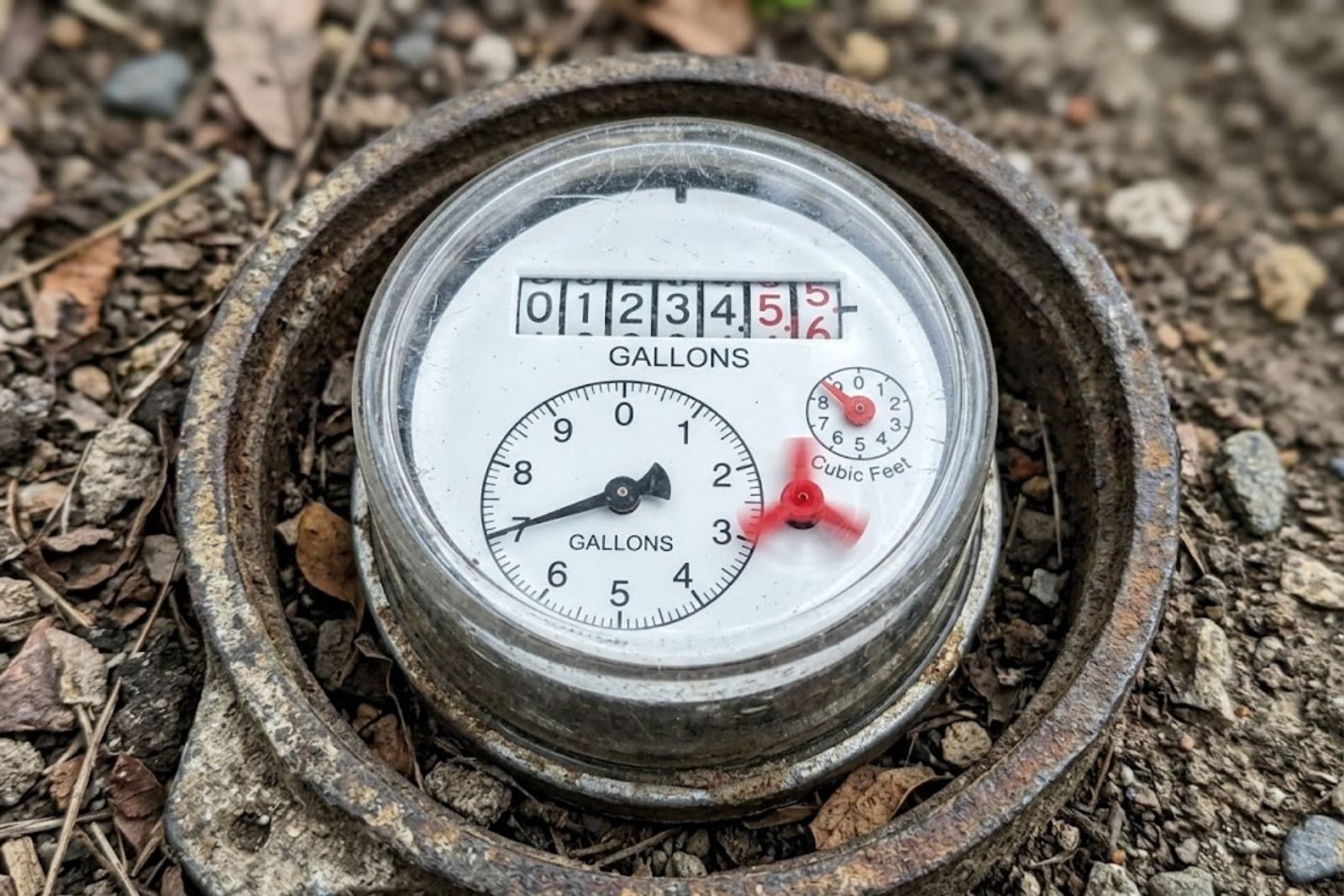
You open your water bill and it's noticeably higher than usual. Nobody's taking longer showers, nobody added a new appliance, the yard isn't getting watered any more than usual. It's one of the most common calls we get in Walnut, CA, and in the vast majority of cases, the answer is a leak somewhere in the system that hasn't produced any other obvious symptom yet.
Step One: Confirm It's Actually a Leak
Before assuming the worst, there's a simple test you can run yourself that takes about thirty minutes and requires no tools. Locate your water meter, usually near the street or at the front of your property. Make sure every fixture in the house is off: no dishwasher or washing machine running, no faucets dripping, no ice maker mid-cycle. Note the exact reading on the meter. Wait 20-30 minutes without using any water at all, then check the meter again.
If the reading hasn't moved at all, your plumbing system isn't actively leaking, and the bill increase likely has a different explanation: an actual change in usage you haven't accounted for, a rate change from your water provider, or a billing error worth calling about. If the reading has moved, even slightly, with everything off, that confirms an active leak somewhere in the system between the meter and your fixtures.
Why This Test Actually Works
A water meter measures flow, not just usage at fixtures. If water is escaping anywhere in your home's plumbing system, whether that's a slab leak beneath the foundation, a leak inside a wall, or a running toilet you haven't noticed, that water still passes through the meter on its way to wherever it's escaping. The meter doesn't know the difference between water going into your dishwasher and water leaking into the ground beneath your slab; it just measures flow. That's exactly why the test is reliable: if nothing at your fixtures is using water and the meter still moves, water is going somewhere it shouldn't.
The Most Common Culprits
A running toilet. This is genuinely the single most common cause of an unexplained water bill increase, and it's often silent enough that homeowners don't notice it running. A worn flapper or fill valve can let water continuously trickle from the tank into the bowl without producing an obvious sound. If you have more than one toilet, check each one individually: put a few drops of food coloring in the tank, wait 15 minutes without flushing, and check if any color has appeared in the bowl. If it has, that toilet has a leak.
A slab leak. If your home was built during Walnut's main 1970s-90s construction wave, and you've ruled out every toilet in the house, a slab leak is a realistic possibility: a leak in a supply line running beneath your home's concrete foundation. That's especially true if you also notice a warm spot on the floor or the sound of running water when nothing's on.
An irrigation or outdoor leak. A hose bib that doesn't fully shut off, an irrigation line with a cracked fitting, or a leak in an underground sprinkler line can waste a surprising amount of water without ever being visible above ground, particularly if the leak is occurring below the soil surface where it simply gets absorbed rather than pooling visibly.
A water heater leak. A slow leak from a water heater's tank, valve, or connections can waste water continuously without ever producing a dramatic puddle, especially if the unit sits over a drain pan that's quietly doing its job of containing the leak while it continues wasting water.
Narrowing Down the Location
If your meter test confirmed a leak, the next step is narrowing down where it is before calling someone, since that information helps a technician diagnose faster. A few things worth checking:
- Check every toilet with the food coloring test described above, since it's the most common cause and the easiest to rule in or out yourself.
- Walk the exterior of your home and check all hose bibs and any visible irrigation valve boxes for dampness or pooling.
- Check around your water heater's base for any dampness, even minor.
- Note any warm spots on flooring, particularly near a water heater or along hallways where a hot water line might run.
If none of these turn up an obvious answer, that points toward something less visible: a slab leak, a leak inside a wall, or an underground irrigation line leak, all of which require professional leak detection equipment to locate without guessing where to dig or cut into a wall.
How Professional Leak Detection Works
Electronic leak detection uses acoustic sensors, which listen for the specific sound signature of pressurized water escaping through a small opening, combined with pressure testing, which isolates sections of your plumbing system to determine which specific line is affected. This combination typically narrows a hidden leak down to a small, specific area rather than requiring exploratory demolition across an entire section of your home.
What Happens If You Wait
A leak that's actively raising your water bill doesn't resolve on its own, and the cost compounds in two ways. First, the direct cost: every day the leak continues is more wasted water showing up on your bill. Second, and often more significant, is the risk of secondary damage: a slab leak left unaddressed can eventually cause flooring damage or create conditions favorable to mold growth, and an irrigation leak can, over time, erode soil or affect a foundation's surrounding grade.
What to Do Once You've Confirmed a Leak
If you've ruled out every toilet and can't find an obvious external source, the most efficient next step is scheduling a leak detection visit rather than continuing to guess. Describing what you've already checked, including the meter test results and which toilets and outdoor fixtures you've ruled out, helps a technician start the diagnostic process more efficiently rather than repeating steps you've already completed. A confirmed leak location, rather than an assumption, is what lets a repair address the actual problem the first time.
A Note on Billing Adjustments
Some water utilities offer a one-time billing adjustment for households that discover and fix a genuine leak, recognizing that the wasted water wasn't the result of normal use. Policies vary significantly by provider, so it's worth asking your specific water utility whether this applies once you've confirmed and repaired a leak, since it can meaningfully offset the cost of the elevated bill you already paid while the leak was active and undiscovered.
Why the Meter Test Beats Guessing
It's tempting to skip the meter test and just start checking fixtures directly, but doing the test first actually saves time. Without it, you're checking every possible source without knowing whether there's an active leak at all, and a bill increase sometimes does have an ordinary explanation, a guest staying longer than usual, a new pet, an extra load of laundry each week that's easy to forget about. The meter test gives you a clear yes-or-no answer before you invest time chasing a problem that might not exist, and if it does confirm a leak, it also gives you a useful data point, roughly how much water is escaping per unit of time, that a technician can use alongside their own diagnostic equipment when they arrive.