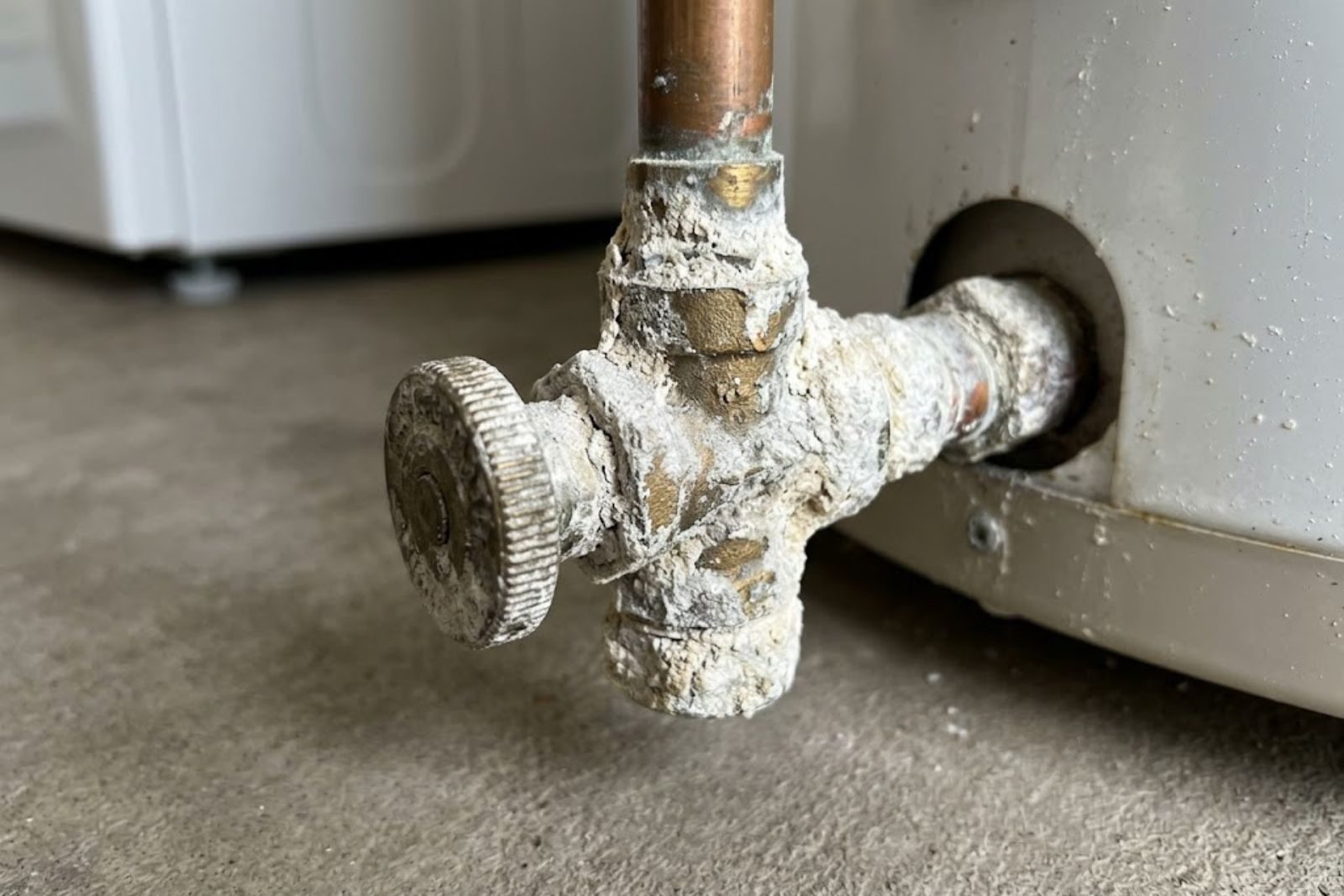
If your water heater in Walnut, CA failed sooner than you expected, or you've noticed your current one making more noise than it used to, hard water is a realistic part of the explanation, even if you've never thought about your water's mineral content before. Walnut Valley Water District's Annual Water Quality Report classifies local water as moderately hard, generally in the 8-10 grains-per-gallon range depending on the specific testing year, and that mineral content does something specific and measurable inside a water heater tank over time.
What "Moderately Hard" Actually Means
Water hardness measures the concentration of dissolved calcium and magnesium, minerals that occur naturally in groundwater as it moves through mineral deposits before reaching a treatment plant. Walnut Valley Water District's own reporting places local water in the moderately hard range, higher than the soft water common in some parts of the country, though not in the "very hard" category that causes the most severe scaling. It's enough, though, to matter for anything that heats or repeatedly cycles water: water heaters, dishwashers, and washing machines all see it first.
The mechanism is straightforward. As water heats, dissolved calcium and magnesium become less soluble and begin precipitating out as solid scale. Inside a tank water heater, that scale settles at the bottom, where it acts as an insulating layer between the burner or heating element and the water itself. The heater has to work harder and longer to reach the same temperature, which shows up as higher energy use long before it shows up as an obvious failure.
How Scale Buildup Actually Fails a Water Heater
Sediment buildup causes water heater problems in a few specific, predictable ways, not through some vague "wear and tear" explanation:
Reduced efficiency. A layer of scale on the tank bottom insulates the water from the heat source, meaning the burner or element runs longer to reach the same temperature. Over months and years, that's a real, measurable increase in energy cost, even before anything actually breaks.
Popping and rumbling noises. Water trapped underneath a layer of sediment boils and escapes through the scale layer, creating the popping or rumbling sound many homeowners notice long before they connect it to hardness. If your water heater has gotten noisier over the past year or two, this is very often why.
Premature element or burner failure. On electric water heaters, the heating element sits directly in contact with accumulated sediment, which causes it to overheat and fail well before its rated lifespan. On gas units, heavy sediment buildup can affect the burner's efficiency and, in severe cases, contribute to tank damage from uneven heating.
Reduced hot water capacity. Enough sediment at the tank bottom physically displaces usable water volume, meaning a 50-gallon tank might effectively function closer to 40 gallons of usable hot water once significant buildup has accumulated.
Tank vs. Tankless: Does Hardness Affect Both?
Yes, though differently. A tank water heater deals with sediment settling at the bottom of a large water volume. That's why periodic tank flushing (draining a portion of the tank to remove settled sediment) is a genuinely useful maintenance step in a moderately hard water area, even though it's one of the most commonly skipped pieces of home maintenance.
A tankless water heater doesn't store water the same way, but it circulates all of its water through a much smaller, more tightly-toleranced heat exchanger. Scale buildup on that heat exchanger surface restricts flow and reduces heating efficiency more noticeably and more quickly than the equivalent buildup would in a large tank. That's why tankless manufacturers are specific about recommending annual descaling in moderately hard water areas like this one: the smaller, more precise components are more sensitive to the same mineral buildup that a tank unit tolerates for longer before showing symptoms.
What Actually Helps
There are really two levels of response here, and it's worth understanding both rather than jumping straight to the most expensive option.
Maintenance-level response: periodic tank flushing for tank units, and scheduled descaling for tankless units. This doesn't eliminate the mineral content in your water, but it removes accumulated buildup before it causes the efficiency and noise problems described above. For a tank unit that's never been flushed, the first flush sometimes reveals a surprising amount of sediment, and it's reasonable to expect a noticeable difference in performance afterward.
Source-level response: a whole-home water softener addresses the mineral content itself before it ever reaches your water heater, dishwasher, or any other fixture in the house. This is a bigger investment than periodic maintenance, but it addresses the cause rather than managing the symptom on an ongoing basis. Whether it makes sense for your household depends on factors like how long you plan to stay in the home, how many water-heating appliances you're trying to protect, and your tolerance for ongoing maintenance versus a larger upfront investment.
Signs Your Water Heater Is Already Affected
A few specific signs point toward hardness-related wear rather than simple age:
- Popping, cracking, or rumbling sounds during the heating cycle
- A noticeable drop in how long your hot water lasts compared to when the unit was new
- Rising energy bills without a corresponding change in hot water usage habits
- Visible white or chalky mineral deposits around fixtures fed by the same water heater
None of these signs alone confirms hardness is the specific cause, since normal component aging produces some overlapping symptoms. That's why a technician checking a water heater for these signs also inspects the actual sediment level and component condition directly rather than assuming based on symptoms alone.
The Bottom Line for Walnut Homeowners
If your water heater is younger than 8 years old and already showing these signs, hardness-related buildup, rather than simple age, is a realistic explanation worth checking before assuming the unit needs full replacement. If it's already past a typical 8-12 year service life and showing these signs, that combination often points toward replacement being the more cost-effective path forward compared to another round of maintenance on an aging unit.
Either way, a real diagnostic look at the tank's actual sediment level and component condition beats guessing based on symptoms alone, and it's the difference between a maintenance visit that extends a unit's life and a repair that turns out to have been unnecessary once the real cause is identified.
How Often Should a Tank Actually Be Flushed?
There's no single universal answer, since it depends on actual water use volume and how long a particular unit has gone without maintenance, but annually is a reasonable starting point for a moderately hard water area like Walnut, especially for a tank that's never been flushed before or hasn't been in several years. A tank that's gone five or more years without any flushing sometimes has enough accumulated sediment that the first flush should be done carefully, since a large volume of disturbed sediment can occasionally affect the drain valve or heating element differently than a routine annual flush would.
Households on a private well, rather than municipal water, sometimes deal with even higher mineral content than the WVWD's municipal figures reflect, since well water hasn't gone through the same treatment process; that's a separate conversation from typical Walnut homes on the municipal system, but worth mentioning if your situation is different from the norm.
What This Costs Compared to Doing Nothing
A tank flush or a tankless descaling service costs meaningfully less than a full water heater replacement, and both extend the realistic service life of an existing unit rather than simply delaying an inevitable failure. The real cost comparison isn't maintenance versus nothing, since "nothing" isn't actually free: it's higher energy bills every month from reduced efficiency, plus a real chance of needing a full replacement years earlier than the unit's rated lifespan would otherwise suggest. Framed that way, periodic maintenance in a moderately hard water area like this one is closer to a cost-avoidance measure than an optional add-on.